Choosing Custom Kraft Paper Bags is not a simple design exercise. It is a practical decision about strength, appearance, cost, and customer experience. A bag that looks attractive may still fail under a warm takeaway meal or several glass bottles.
Packaging strategist Lisa McTigue Pierce describes packaging as “the product’s silent salesperson.” Her observation matters here. Custom Kraft Paper Bags communicate your brand before customers read a label or visit your website. Their paper color, handle style, logo placement, and surface texture can suggest value, simplicity, or environmental responsibility. However, appearance should never replace performance.
A reliable selection process begins with the product itself. Measure its weight, shape, and sharp edges. Then consider the bag’s paper weight, gusset depth, handle construction, and opening size. A bakery may need grease resistance and a flat base. A clothing store may prioritize clean printing and comfortable twisted-paper handles. A small retailer could choose a lighter bag, but saving material may create complaints if the handles tear.
Ask suppliers for physical samples. Fill each sample with the heaviest typical order. Carry it across a busy shop floor. Leave it near a damp doorway for a short test. These simple checks reveal weaknesses that attractive product images hide.
Sourcing also deserves careful review. Request information about recycled content, paper origin, inks, coatings, and manufacturing consistency. Certifications can support trust, but they should be verified rather than assumed. My own cautious view is that no bag is perfect. A “green” message becomes questionable when the bag is oversized, overprinted, or frequently discarded after one use. Choose the smallest reliable format, test it honestly, and let practical evidence guide the final decision.
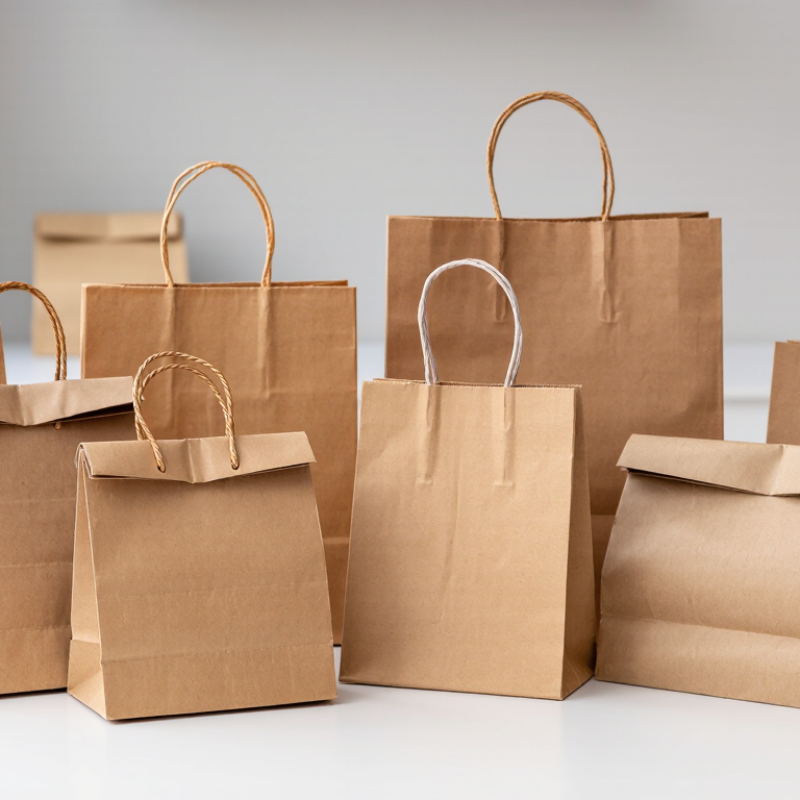
How to Choose Custom Kraft Paper Bags for Your Business
Define your product before choosing kraft paper bags. A glass jar needs stronger paper, reinforced bases, and wider handles. A lightweight garment may need only a slimmer format. Measure the product, including headspace and protective materials. In packaging reviews, a recurring mistake is choosing appearance before load testing. The bag looks premium but fails at the counter. Paper and paperboard reached a 68.2% recycling rate in 2018, according to the U.S. Environmental Protection Agency. That figure supports paper’s practical appeal, but recyclability still depends on coatings, inks, and local systems.
Your brand requirements should guide color, typography, handle style, and print coverage. Natural kraft communicates simplicity, while heavier stock creates a more substantial hand feel. The global paper bags market was valued at about $5.4 billion in 2022, according to Grand View Research. Competition is growing, so recognisable details matter. Still, more printing does not always create better branding. It may increase cost and reduce the bag’s natural character. Define your packaging requirements around carrying distance, product weight, storage space, and moisture exposure. Request samples before approving production.
Tips: Test each bag with 1.5 times its expected load. Check handle comfort after ten minutes. Ask for paper weight, recycled content, and coating details. Keep one sample in storage for comparison. A perfect bag rarely exists; review failures honestly and revise the specification.
Choosing a custom kraft paper bag starts with the paper type, not the artwork. Natural kraft has a warm, fibrous appearance and hides minor scuffs well. Bleached kraft gives sharper colors and a cleaner retail look. Recycled kraft supports a circular message, but its fibers may vary in strength. The Smithers report, The Future of Paper Packaging to 2028, identifies paper packaging as a continuing growth area. That demand does not make every paper suitable.
Check the product weight, moisture exposure, and carrying distance. A bakery box needs different protection from a bottle or a folded sweater. Ask for paper grammage, commonly measured in GSM, and request load testing with the final handle design. A twisted paper handle feels comfortable, while a flat handle saves space. The bottom gusset also matters. A narrow bag can tip easily. A wider gusset improves stability.
Measure the packed product before choosing dimensions. Leave practical clearance, but avoid excessive empty space. Smaller bags usually use less material and store more efficiently. A 2020 global sustainability study found that nearly six in ten consumers were willing to change shopping habits to reduce environmental impact. Still, recycled paper is not automatically the best choice. I have seen oversized bags look impressive, then fail because the base was too weak. Sample testing is unglamorous. It is also where most useful corrections happen.
| Kraft Paper Type | Typical Basis Weight | Key Characteristics | Recommended Applications | Suitable Bag Sizes | Recommended Structure | Typical Load Range | Important Selection Considerations |
|---|---|---|---|---|---|---|---|
| Natural Brown Kraft | 70–120 GSM | Unbleached brown appearance, good tear resistance, and a natural organic look. | Retail clothing, takeaway food, bakeries, groceries, and environmentally focused packaging. | Small to large formats, approximately 180 × 90 × 230 mm to 450 × 170 × 350 mm. | Single-wall construction with twisted paper handles or flat paper handles. | Approximately 1–8 kg, depending on size, handle design, and construction. | Choose higher GSM paper and a reinforced base for heavier products. Food-contact suitability should be confirmed for direct food packaging. |
| White Kraft | 80–140 GSM | Smoother and brighter surface with better contrast for printed graphics and fine text. | Fashion retail, cosmetics, gifts, events, and premium product packaging. | Small to medium formats, approximately 160 × 80 × 220 mm to 400 × 140 × 320 mm. | Single-wall construction; laminated or coated options can be used where additional surface protection is needed. | Approximately 1–6 kg, depending on paper weight and bag dimensions. | White kraft provides a cleaner print background, but scuffs and stains may be more visible than on brown kraft. |
| Recycled Kraft | 80–150 GSM | Made with recycled fiber content; color and surface texture may vary between production batches. | Everyday retail, promotional distribution, bookstores, apparel, and sustainability-oriented campaigns. | Small to large formats, approximately 180 × 90 × 230 mm to 450 × 180 × 380 mm. | Single-wall for light goods or reinforced gussets and a laminated base for heavier items. | Approximately 1–8 kg, subject to recycled fiber quality and bag construction. | Request the recycled content percentage and verify strength requirements before selecting the lowest paper weight. |
| Bleached Kraft | 90–160 GSM | Bright, relatively uniform surface with good printability and a more refined appearance. | Premium retail, personal care products, gift packaging, and branded presentation bags. | Small to medium formats, approximately 180 × 90 × 230 mm to 420 × 150 × 350 mm. | Single-wall or double-wall construction with reinforced handle patches for higher carrying comfort. | Approximately 1–8 kg, depending on dimensions and reinforcement. | Use when visual consistency and high-quality printing are more important than a raw, unbleached appearance. |
| Wet-Strength Kraft | 90–170 GSM | Designed to retain more strength when exposed to moisture than standard kraft paper. | Food takeaway, flower shops, chilled goods, outdoor events, and products exposed to condensation. | Medium to large formats, approximately 220 × 100 × 280 mm to 450 × 180 × 380 mm. | Gusseted construction with a reinforced base; internal or external coatings may be added when appropriate. | Approximately 2–10 kg, depending on moisture exposure, dimensions, and reinforcement. | Wet-strength paper improves moisture resistance but does not make the bag waterproof. Confirm applicable food-packaging requirements. |
| Grease-Resistant Kraft | 40–100 GSM | Helps reduce oil and grease penetration when used with suitable food-packaging treatments or inner layers. | Fast food, pastries, sandwiches, fried foods, snack products, and bakery items. | Small to medium formats, approximately 120 × 70 × 180 mm to 300 × 120 × 350 mm. | Open-top pouch, block-bottom bag, or gusseted bag with a suitable grease-resistant inner surface. | Approximately 0.25–3 kg, depending on product density and moisture or oil content. | Check whether the paper is intended for direct food contact and match the grease barrier to the product’s oil level and serving temperature. |
| Heavy-Duty Kraft | 120–250 GSM | Higher stiffness and tear resistance for heavier or bulky products. | Hardware, footwear, books, bottles, packaged food, and multi-item retail orders. | Medium to extra-large formats, approximately 250 × 120 × 300 mm to 500 × 200 × 450 mm. | Double-wall paper, wide gussets, reinforced base, and durable twisted or flat paper handles. | Approximately 5–15 kg, subject to testing and the complete bag design. | Load capacity depends on paper strength, handle attachment, bottom construction, and how the contents are distributed. |
| Colored or Printed Kraft | 80–160 GSM | Provides additional visual customization through colored paper, flexographic printing, or offset printing. | Retail promotions, seasonal campaigns, events, gifts, and products requiring strong shelf or hand-carry visibility. | Small to large formats, selected according to the product dimensions and display requirements. | Single-wall for general retail use; reinforced structure for large graphics, heavier contents, or frequent handling. | Approximately 1–8 kg, depending on the paper grade and bag structure. | Confirm color consistency, print coverage, ink suitability, and whether the design requires a coated or laminated surface. |
Note: The load ranges are general planning guidelines rather than guaranteed specifications. Final capacity should be confirmed through sample testing under the intended product weight, handling conditions, and storage environment.
When selecting custom kraft paper bags, start with the customer’s actual carrying experience. Handles should match product weight, distance, and grip. Flat paper handles suit light retail items. Twisted handles feel stronger for boxed goods. For heavier loads, ask for reinforced handle patches and test a filled sample. Test every sample. I once approved a bag that looked sturdy but cut into fingers after a short walk. That mistake changed my sampling process.
Closures affect speed, security, and presentation. Fold-over tops work well for takeaway orders and quick packing. Adhesive strips create a cleaner seal, but they may slow busy staff. Drawstrings add a premium feel, yet they increase material use and cost. Test opening and closing with gloves or wet hands if your workplace requires them. The best closure is not always the most decorative. Looks can mislead.
Printing should remain readable under store lighting and after handling. Request a proof showing logo size, color contrast, and placement near folds. Large solid areas can make kraft fibers look uneven. That texture is natural, but it can weaken fine details. Ask about water-based inks, drying performance, and print durability. Custom features such as gussets, windows, rounded corners, or internal dividers can improve function. Measure them against packing time, storage space, and disposal expectations. I would compare two prototypes, not one. Small changes often reveal hidden costs.
Choosing custom kraft paper bags requires more than comparing unit prices. Supplier reliability matters just as much. Request samples from at least three manufacturers. Check paper thickness, handle strength, fold accuracy, and print clarity. A bag may look attractive online but feel weak in hand. I once approved a sample too quickly. The printed color changed slightly during mass production.
Minimum order quantities can affect your budget and storage space. A lower unit price may require thousands of bags. That creates unused inventory if your design changes. Ask whether the supplier offers different quantity tiers. Confirm setup fees, plate charges, packaging costs, shipping, and taxes. Calculate the landed cost per bag. Do not compare factory prices alone. Production quality also depends on written specifications. Include paper weight, bag dimensions, handle type, ink coverage, and acceptable defect rates. Request a pre-production sample before manufacturing begins. A third-party inspection can provide useful evidence, although it adds time and expense.
Tips: Compare like-for-like samples. Test each handle with realistic weight. Measure ten bags, not one. Ask for production photos and quality records. Confirm the delivery schedule in writing. Leave extra time for rework. This is often overlooked. Keep a small sample from every approved batch. It helps identify changes later. A supplier who answers clearly is valuable, but clear answers must match actual results.
Choosing custom kraft paper bags starts with checking sustainability standards, not just selecting a brown finish. Ask suppliers for recycled-content percentages, responsible forestry certificates, and test reports. Confirm whether the paper comes from controlled sources and whether inks, adhesives, and handles meet your market’s requirements. A sustainability claim without documents is only a promise.
Request physical samples before approving production. Feel the paper weight, fold the gusset, and test the handle with your heaviest typical product. Place the bag on a damp counter for several minutes. It may soften sooner than expected. This small test can reveal weaknesses that photographs hide. Compare two or three samples under store lighting, because colors often appear different on natural kraft paper.
Prepare final specifications in writing. Include bag dimensions, paper thickness, handle material, printing colors, artwork position, stitching or bonding details, packaging method, and acceptable tolerances. Confirm whether measurements describe the inside or outside of the bag. That detail causes avoidable errors. Request a signed pre-production sample and retain it for quality comparison. I have found that even careful teams overlook handle length or logo alignment when deadlines become tight. Leave time for one revision, and treat supplier feedback as useful evidence rather than an inconvenience.
Natural kraft offers a warm, fibrous appearance and hides small scuffs. Bleached kraft produces sharper colors and a cleaner retail look. Recycled kraft supports a circular message, but fiber strength may vary. Test before deciding.
Measure the packed product first. Leave useful clearance, but avoid large empty spaces. A wider bottom gusset improves stability. Narrow bags may tip when carrying bottles or boxes.
Consider product weight, moisture, and carrying distance. Ask for paper grammage in GSM. Request load testing with the final handle design. A bakery box needs different protection from a bottle.
Flat paper handles suit lightweight retail items and save storage space. Twisted handles feel stronger for boxed products. Heavy loads may need reinforced handle patches. Test a filled bag during a short walk.
Check comfort, attachment strength, and handle length. Carry the heaviest typical product. Also inspect finger pressure. A bag can look sturdy and still hurt after several minutes.
Fold-over tops support quick packing and takeaway orders. Adhesive strips create a cleaner seal, but they may slow staff. Drawstrings add a premium feel and use more material. Practicality matters more than decoration.
Request a physical proof under store lighting. Check color contrast, logo placement, and folds. Large solid areas may look uneven on kraft fibers. Fine details can lose clarity after handling.
Ask for recycled-content percentages, forestry certificates, and test reports. Confirm the source of the paper. Check the inks, adhesives, and handles too. A claim without documents is only a promise.
Feel the paper, fold the gusset, and test the heaviest product. Place the bag on a damp counter for several minutes. It may soften quickly. Photos hide weaknesses.
Record dimensions, paper thickness, handle material, printing colors, and artwork position. Include bonding details, packaging methods, and acceptable tolerances. Confirm whether measurements describe inside or outside dimensions. Keep a signed pre-production sample for comparison. Mistakes still happen.
Choosing Custom Kraft Paper Bags starts with a clear understanding of your products, brand identity, and packaging goals. Consider the product’s weight, shape, protection needs, and presentation style before selecting the appropriate kraft paper type, thickness, size, and bag structure. You should also decide whether you need twisted or flat handles, secure closures, reinforced bases, windows, or other practical features. Printing options should match your visual identity while keeping important information clear and readable.
A reliable supplier should offer suitable minimum order quantities, transparent pricing, consistent production quality, and reasonable lead times. Requesting samples is an effective way to check paper strength, color accuracy, handle durability, printing results, and overall construction before placing a larger order. It is also important to review sustainability standards, recycled content, responsible sourcing, and end-of-life considerations. By comparing materials, customization options, supplier capabilities, and final specifications carefully, businesses can select packaging that is functional, attractive, cost-effective, and aligned with their environmental objectives.

Miji