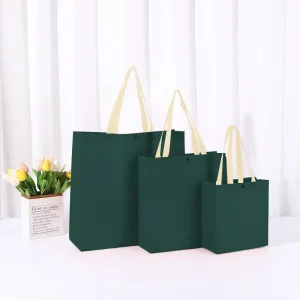
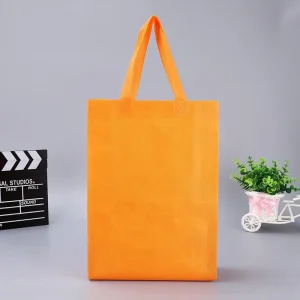
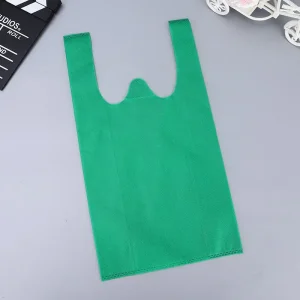
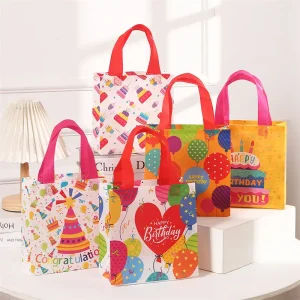
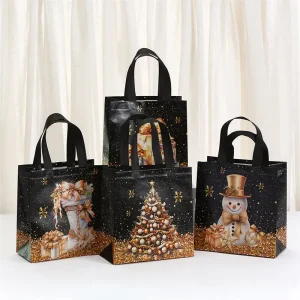
Industrial Non-Woven Bag Supplier & Factories

Sustainable B2B Packaging Solutions Engineered for Global Enterprises. High-Efficiency Manufacturing, Strict Quality Control, and Tailored Customization.

Home / Products / Non-Woven Bags

1. Global Landscape of Non-Woven Packaging

An authoritative analysis of current B2B markets, regulatory shifts, and technical advancements driving non-woven bag consumption globally.

The industrial landscape for carrier bags and packaging materials has experienced a monumental transformation over the past decade. Driven by urgent global mandates to reduce single-use plastic dependencies—such as the European Union’s Directive on Packaging and Packaging Waste (Directive 94/62/EC) and various state-wide plastic bans across North America—enterprises have widely adopted Polypropylene (PP) Non-Woven Bags as the gold standard for eco-friendly compliance and durable brand marketing.

Unlike standard thin-film plastic bags, which are typically discarded after a single use, high-quality non-woven fabrics are structurally designed to endure hundreds of use cycles. This reuse capability qualifies them as highly sustainable alternatives under international circular economy models. The global non-woven fabric market, particularly for packaging applications, is growing at a projected Compound Annual Growth Rate (CAGR) of 6.5% through 2030, fueled by demand from retail, logistics, medical devices, agricultural preservation, and promotional corporate gifting.

"Semantically, B2B buyers no longer search merely for 'cheap shopping bags.' Search intent has shifted toward supply chain longevity, certified mechanical properties (such as tensile strength), compliance certifications (RoHS, REACH, and OEKO-TEX), and sustainable raw material sources."

Environmental Compliance & Regulatory Drivers

Global procurement teams must navigate local environmental regulations. In the United States, states like California and New York enforce strict rules that require reusable bags to withstand at least 125 uses and carry a minimum carrying capacity of 22 pounds (approximately 10 kilograms), constructed from materials with a minimum weight of 80 GSM (Grams per Square Meter). Our Chinese factories design products to exceed these international standards, providing structural insurance for importers.

2. Manufacturing Process & Materials Science

A closer look at how industrial non-woven polymers are fabricated, constructed, and decorated for high-performance applications.

To understand the quality variances in wholesale non-woven tote bags, it is necessary to examine the primary raw materials and manufacturing methods used in modern facilities:

Spunbond Polypropylene Technology

The primary fabric used for reusable bags is Spunbond Polypropylene (PP). This thermopolymer is extruded and stretched to create continuous filaments, which are then laid down in a random web pattern. The web is passed through a heated mechanical roller calibrator (thermal bonding), which bonds the fibers together. This process produces a fabric that is lightweight, breathable, and highly resistant to tears and punctures.

Understanding GSM (Grams per Square Meter) Thickness

GSM is the standard metric used to measure fabric density and strength. Choosing the right GSM is critical for aligning budget targets with expected product lifespans:

40 - 60 GSM

Optimized for lightweight applications, dust covers, simple promotional events, and single-use gift packaging. Offers high cost-efficiency for high-volume distributions.

70 - 90 GSM

The industry standard for retail grocery bags, custom promotional totes, and branded trade show giveaways. Delivers an ideal balance of tensile strength and unit economics.

100 - 120+ GSM

Premium, heavy-duty utility grade. Used for industrial tool carrier bags, delivery bags, and laminated retail shopping totes designed for prolonged reuse.

Advanced Printing & Customization Technologies

A bag's marketing impact is directly tied to its aesthetic design. Modern manufacturing processes support multiple printing styles:

  • Silk Screen Printing: Excellent for bold logos with solid spot colors. Highly cost-effective for medium to large production runs.
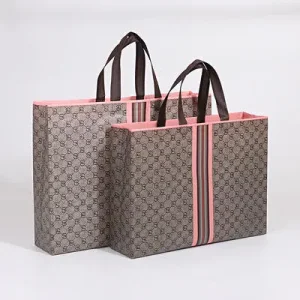
  • Rotogravure Lamination (OPP Film Lamination): Allows for photorealistic, full-color printing. An oriented polypropylene (OPP) film is printed and then laminated onto the non-woven base, providing water resistance and increased structural integrity.
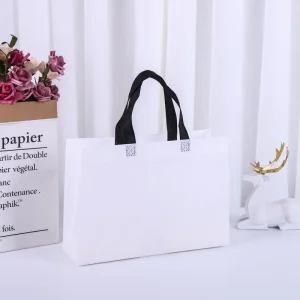
  • Heat Transfer Printing & Sublimation: Ideal for complex designs, gradients, and photographic prints on white sublimation fabric bases.

5,000㎡

Advanced Production Facility

80+ Tons

Monthly Non-Woven Output

125+

Guaranteed Reuse Cycles

100%

Customizable Dimensions & Print

3. China Factory Efficiency & Supply Chain Advantages

Why sourcing directly from China's premier industrial printing zones guarantees optimal unit economics and strict quality assurance.

When searching for a reliable non-woven bag manufacturer, sourcing teams evaluate more than just basic price quotes. The geographical concentration of supply chains plays a critical role in production speed and cost-efficiency. Our factory is located in the Wenzhou Longgang Packaging & Printing Industrial Park—often recognized globally as the heart of China’s advanced printing and packaging industry.

This industrial clustering provides key strategic advantages for B2B buyers:

  1. Direct Material Access: Raw polypropylene granules, non-woven extrusion lines, handle webbing, sewing thread, and dye inks are all sourced locally. This reduces internal logistics costs and speeds up raw material procurement.
  2. High-Speed Automation: Equipped with automatic ultrasonic heat-sealing bag-making machines, our production line can produce up to 200 bags per minute. This reduces labor costs while maintaining high dimension accuracy.
  3. Integrated Logistical Network: Located close to Ningbo and Shanghai ports, we offer streamlined shipping coordinates, simplifying export customs clearance and container consolidation.

4. About MIJI: Industrial Customization Experts

Combining design expertise, high-quality printing capabilities, and structured project management to serve global brands.

Yiwu Miji Trading Co., Ltd. is a specialized manufacturer and supplier of custom notebooks, corporate gift sets, custom paper bags, and packaging accessories. Over the years, we have expanded our manufacturing footprint into modern eco-friendly packaging, focusing on custom PP non-woven shopping bags and promotional tote bags.

Operating a 5,000-square-meter facility in Wenzhou Longgang, we provide end-to-end support for custom B2B packaging projects. We help brands, wholesalers, and promotional gift distributors design coordinated, retail-ready packaging that matches their corporate identities.
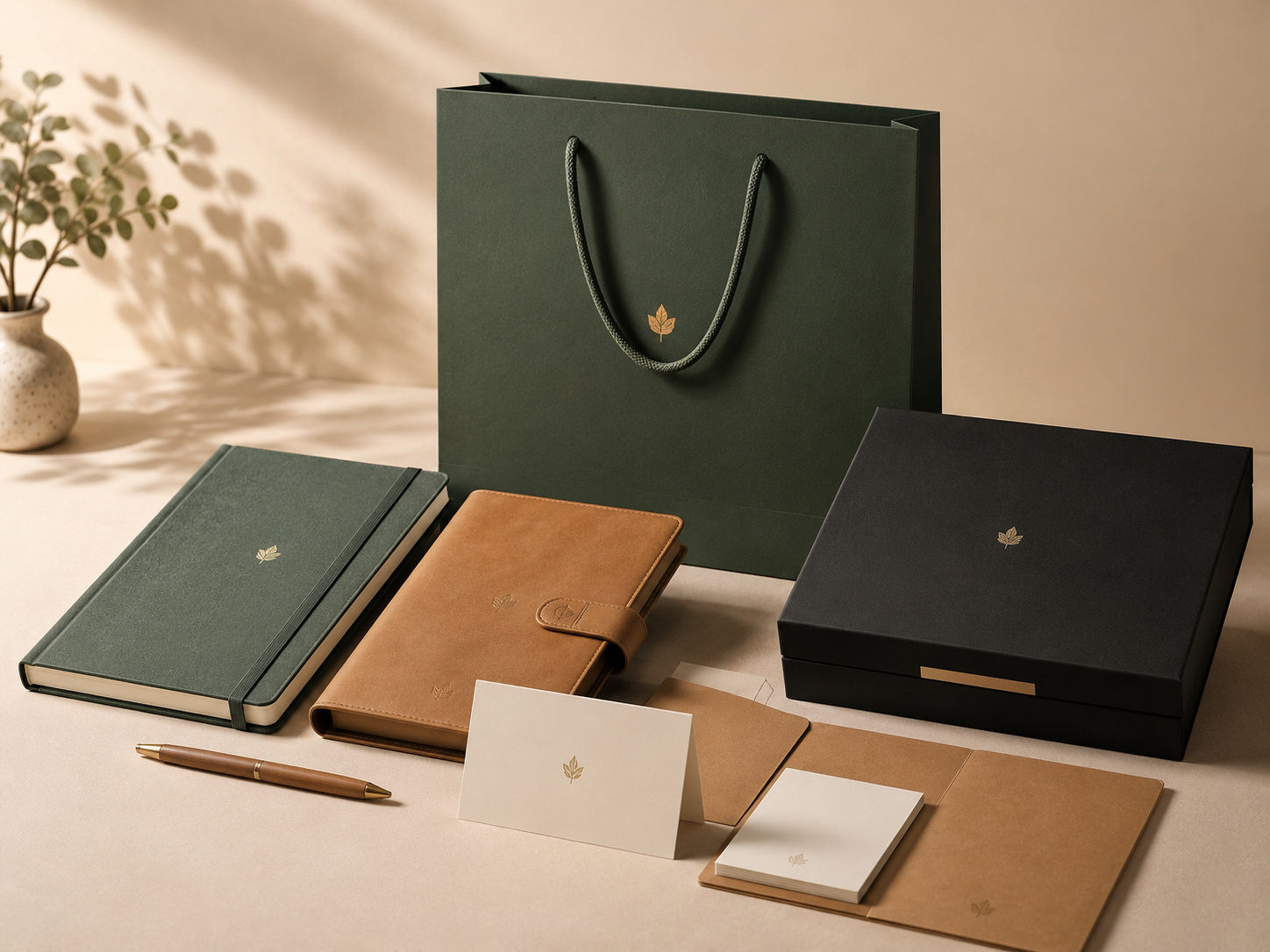
MIJI Factory Floor and Production Operations

Structured 6-Step Project Flow

We use a structured process to ensure that your bulk orders are manufactured and shipped to your specifications:

1

1. Send Inquiry

Share your target bag dimensions, quantity requirements, logo designs, handle styles, and target delivery timelines.

2

2. Confirm Details

Select material thickness (GSM), printing method, and structural design (e.g., ultrasonic heat-sealed or stitched).

3

3. Artwork Proof

Confirm the final graphic placement and print alignments via a digital PDF mockup.

4

4. Sample Check

Review physical pre-production samples to verify fabric colors and printing quality prior to bulk manufacturing.

5

5. Production & QC

Bulk production begins, backed by automated quality checks to verify handle tensile strength and print registration.

6

6. Shipping Logistics

Final packaging is completed with sea, air, or express delivery coordinates arranged to meet your project timeline.

5. Localized Applications & Global Industry Trends

How different industries utilize custom non-woven packaging, and the technical innovations shaping the future of reusable bags.

Sector-Specific Applications

  • Supermarkets & Retail: Highly durable, water-resistant bags designed with wide bottom gussets to handle heavy grocery loads.
  • Corporate Events & Promotions: Branded custom totes used to distribute marketing materials, notebooks, and gift sets at trade shows.
  • E-Commerce & Logistics: Lightweight, sealable non-woven mailers used to ship clothing and accessories, helping to reduce volumetric shipping weight.
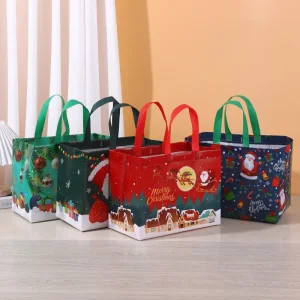
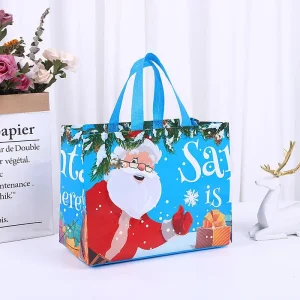
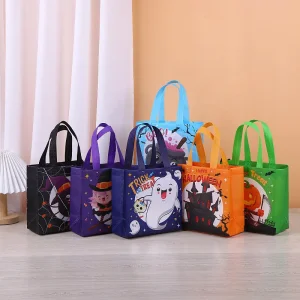
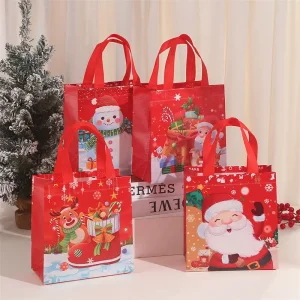
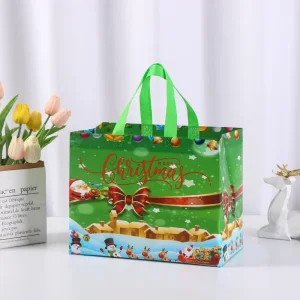
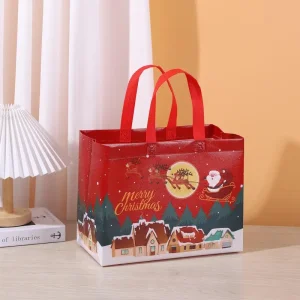
  • Specialty Gifting: Laminated, festive-themed bags designed for holidays like Christmas, Easter, and Halloween, providing a durable alternative to paper gift bags.

Key Industry Development Trends

The reusable packaging market is shifting towards circular economy models. Key technical innovations include:

  1. rPET Non-Woven Fabrics: Utilizing recycled polyethylene terephthalate (rPET) sourced from post-industrial plastic bottles, further reducing carbon footprints.
  2. Biodegradable PLA Blends: Incorporating polylactic acid (PLA) into polypropylene webs to accelerate biodegradation in industrial composting environments.
  3. Ultrasonic Welding: Moving away from traditional thread stitching to automated ultrasonic welding. This produces stronger, cleaner seams and reduces mechanical points of failure.

6. B2B Procurement Strategy: Total Cost of Ownership (TCO) Checklist

A guide for sourcing directors to evaluate supplier capabilities and calculate true landed costs.

To optimize B2B procurement operations and avoid hidden costs, sourcing teams should utilize the following technical checklist during supplier evaluations:

"When sourcing overseas, the unit price represents only a portion of the Total Cost of Ownership. Buyers must also consider duty classifications, freight volumes, and quality rejection rates."
  • Material Verification: Request raw material test reports confirming 100% virgin PP content, as recycled additives can reduce tensile strength and lead to tearing.
  • Stitch Density & Seams: For sewn designs, verify that stitch density is at least 3-4 stitches per centimeter, with cross-stitched handles (X-box reinforcement) to distribute loads safely.
  • HS Code Classifications: Ensure accurate HS code declarations (typically 6305.33 or 4202.92 depending on construction) to prevent customs delays and optimize import duty rates.
  • Packaging Specifications: Specify double-walled corrugated outer cartons with internal moisture-barrier polybags to protect the non-woven materials during ocean transit.

7. Technical FAQ: Non-Woven Bag Sourcing

Expert answers to common engineering, procurement, and logistical questions about non-woven bags.
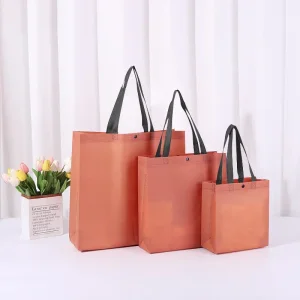
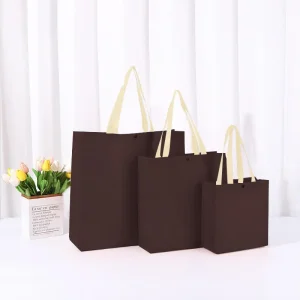
Q1: What is the differences between Spunbond PP and Non-Woven Laminated bags?
Spunbond PP is breathable and has a matte, textured surface, while laminated bags feature an extra layer of OPP film. This lamination supports full-color photorealistic prints and makes the bags water-resistant and easier to clean.
Q2: How does your factory test the weight capacity of non-woven bags?
We perform dynamic load testing by filling the bags to their target weight and testing them on a mechanical hanger system. This simulates regular carrying motion to verify handle and seam strength.
Q3: What are the Minimum Order Quantities (MOQ) for custom bag projects?
Our standard MOQ starts at 1,000 units for stock colors and basic screen printing. For laminated designs requiring custom gravure rollers, the MOQ typically starts at 3,000 to 5,000 units depending on bag size.
Q4: Are your printing inks and dyes compliant with EU and US food contact standards?
Yes, we use eco-friendly water-based and soy-based inks. We provide test certification documents (like SGS, RoHS, and REACH) upon request to verify the absence of heavy metals or harmful chemical pigments.
Q5: What is the typical lead time for a production run of 10,000 bags?
After the pre-production sample is approved, bulk production takes 15 to 20 days. Ocean shipping to Europe or North America typically requires an additional 25 to 35 days, while air shipping takes 7 to 10 days.
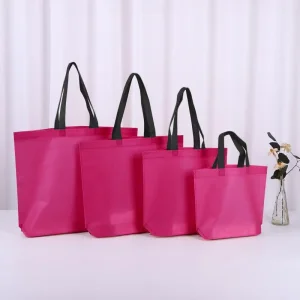
Q6: Can we request custom sizes and custom handle materials?
Yes, we support full size customization. Handles can be configured in various materials, including matching non-woven fabric, heavy-duty PP webbing, cotton rope, or polyester webbing, tailored to your budget and carrying requirements.
Q7: Can these bags be washed or sanitized for reuse?
Yes. Standard non-woven bags can be hand-washed in warm water with mild detergent and air-dried. Laminated bags can be wiped down with sanitizing cloths, making them suitable for grocery and food service uses.
Q8: How do automated ultrasonic seams compare to traditional thread stitching?
Ultrasonic sealing uses high-frequency vibrations to fuse the thermoplastic fibers together, producing clean, uniform seams without sewing threads. While stitched seams are preferred for heavier loads (over 15 kg), ultrasonic sealing offers high precision and cost-efficiency for standard grocery bags.
Q9: How do you prevent color bleeding or dye migration on dark fabrics?
We use colorfast pigments in our masterbatch polymer extrusion process. For high-contrast printing, we apply a base layer of opaque white ink before printing colorful logos, ensuring colors remain vibrant.
Q10: Can we consolidate non-woven bag shipments with other stationery items?
Yes. Our Yiwu operations help consolidate shipments by combining custom non-woven bags with other office, notebook, or packaging items into single container loads, helping to reduce overall shipping costs.
All Non-Woven Bag Products