Ordering Custom Logo Gift Bags in 2026 requires more than uploading a logo and choosing a color. Buyers must connect design, function, budget, and responsible production. A successful order begins with a clear purpose. Are the bags for a luxury launch, a conference, retail packaging, or a seasonal campaign? Each use demands different materials, sizes, handles, and printing methods.
This guide explains how to move from a rough idea to a dependable production order. You will learn how to prepare artwork, compare paper, cotton, and recycled options, and request accurate samples. Small details matter. A dark logo may disappear on kraft paper. Thin handles may fail under heavy products. A beautiful prototype can still feel impractical in daily use. That happens.
Reliable suppliers should provide material specifications, production timelines, quality-control details, and transparent shipping terms. Ask for a digital proof before approval, then inspect a physical sample whenever the order is important. Check logo alignment, color accuracy, stitching, odor, surface strength, and handle comfort. These checks reflect professional purchasing practice, not unnecessary caution.
Pricing also deserves careful attention. The lowest quotation may exclude tooling, packaging, freight, or inspection costs. Sustainable claims require evidence, such as recycled content details or recognized certifications. Requirements can vary by destination, so confirm current packaging and labeling expectations with qualified local professionals. This article offers practical guidance, but no ordering process is flawless. Review every assumption before production begins. Your bags should look impressive, carry products safely, and represent your brand honestly.
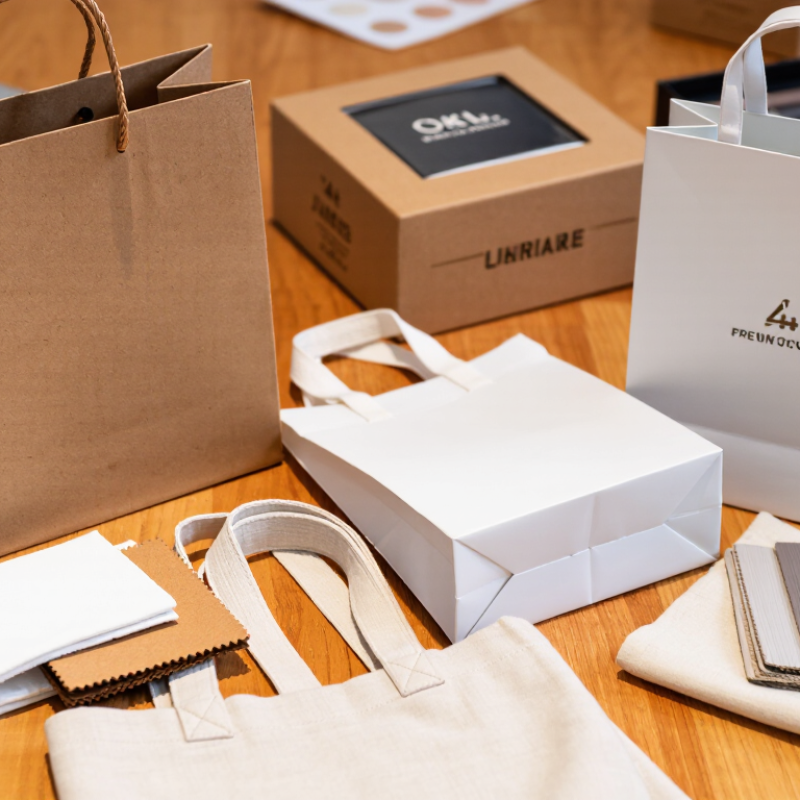
Before requesting a quotation, define the bag’s purpose. Is it for a conference, employee welcome kit, retail packaging, or a seasonal event? Each use changes the required strength, size, and finish. A bag carrying a notebook needs different handles from one holding a glass bottle. Write the audience clearly, too. Consider age, profession, shopping habits, and expected reuse.
The 2023 ASI Ad Impressions Study reported that 85% of consumers remembered an advertiser after receiving a promotional product. A useful bag can keep that memory visible.
Make the requirements measurable. Record the bag dimensions, logo width, print colors, material, handle length, order quantity, delivery date, and target cost. Ask for a physical sample before approving mass production. Check whether the logo remains sharp near seams. Test the handles with the real contents. Small details matter. Paper thickness alone does not prove durability.
If sustainability is part of the purpose, request clear information about recycled content, coatings, inks, and disposal instructions.
A 2024 global consumer study by PwC found that many shoppers consider environmental impact during purchases, but price and convenience still influence decisions.
Your first specification may be incomplete. Mine often is. Recheck the event venue, storage space, and carrying distance. A glossy finish may look impressive, yet it can show fingerprints and complicate recycling. Choose a design that serves the audience, not only the logo.
Leave time for artwork proofing, sampling, production, and inspection. “Fast delivery” is not a complete requirement. State the exact arrival date.
Choosing the right material affects appearance, strength, and disposal. Smithers’ The Future of Global Packaging to 2028 estimates the global packaging market will approach $1.2 trillion by 2028. That growth reflects rising demand for practical, better-designed packaging.
Recycled paper suits conferences, boutiques, and light gifts. Cotton or non-woven fabric works better for repeated use. For heavier products, reinforced paper, canvas, or laminated structures prevent torn handles.
Test the loaded bag first. Empty samples can be misleading.
Size should follow the product, not the logo. Measure the item, then allow space for tissue paper and easy removal. A compact bag may need a 20 × 15 × 8 centimeter base. A bottle or boxed set needs more depth and stronger construction.
Choose flat handles for comfort, twisted paper handles for a refined look, or webbing handles for heavier loads.
Functional features matter too. A folded base improves stability. An inner pocket protects cards or small accessories. Water-resistant coating helps during short outdoor events, although it may complicate recycling.
The 2024 Global Packaging Trends report from a leading packaging research consultancy identifies convenience and sustainability as continuing purchase influences. However, “eco-friendly” should not be treated as a complete specification.
Ask about recycled content, printing methods, handle attachment, and disposal guidance.
Request a physical sample. Check logo sharpness, seam tension, odor, and color under indoor lighting. Imperfections often appear there, not in digital proofs.
Avoid oversized artwork. A clear logo, readable contact detail, and enough empty space usually perform better.
Prepare your logo files before requesting a quotation. Use an editable vector file, such as SVG, EPS, or print-ready PDF. Vector artwork keeps fine lines sharp when the bag becomes large. A raster logo should be at least 300 dpi at its final size. Do not trust a screenshot. It may look clear on a phone but print poorly. Convert colors to CMYK when required, and provide Pantone references for stricter color matching. Include bleed, safe margins, and the intended logo position. A 3–5 mm bleed is commonly requested, but confirm the printer’s specification.
Your artwork package should include the logo, color codes, approved fonts, minimum size, and clear-space rules. Add examples of incorrect use. These details prevent a dark logo from disappearing on a navy bag. They also reduce costly revisions.
The State of Brand Consistency Report estimates that consistent brand presentation can increase revenue by up to 33%. The Global New Product Innovation Report found that 64% of consumers try new products when packaging attracts attention. That evidence supports careful bag design, not excessive decoration.
Ask for a digital proof and, when color is critical, a physical sample. I once assumed the approved screen color would match the finished material. It did not. Surface texture, ink coverage, and lighting changed the result. Leave room for that imperfect reality.
Choosing a supplier starts with the bag’s material, size, handle style, and printing method. In my sourcing experience, recycled paper bags suit short events, while cotton bags support repeated use. Ask for proof. Request a physical sample showing logo sharpness, color consistency, handle strength, and inner finishing. A digital mockup cannot reveal weak stitching or paper that bends easily.
Supplier quotes should separate setup fees, sampling charges, packaging, shipping, and taxes. For a basic printed paper bag, indicative pricing may range from $0.35 to $1.20 per unit at higher quantities. Small orders often cost more, sometimes $1.50 to $4 per bag. Cotton versions usually require a larger budget. Compare at least three written quotations using the same specifications. Otherwise, the cheapest offer can look misleading.
Minimum order quantities vary widely. Some workshops accept 100 to 300 bags, while larger factories may request 1,000 or more. Confirm whether mixed sizes count toward one order. Production commonly takes 10 to 25 working days after artwork approval, with sampling adding another 5 to 10 days. Add shipping time and a buffer of one week. I once underestimated approval delays; the bags arrived after part of the event. That mistake was avoidable. Confirm color references, carton dimensions, inspection photos, and the replacement policy before paying a deposit. Keep every detail in the purchase agreement.
Ordering custom logo gift bags in 2026 should begin with a physical sample, not a digital promise. Ask for one bag in the chosen material, size, handle style, and print method. Check the logo under warm and cool light. Inspect the seams, fold lines, base strength, and handle comfort. A design can look excellent on screen and feel weak in hand. I have approved artwork too quickly before. That mistake usually appears during packing day.
Use the sample to confirm color accuracy, logo spacing, and readable text. Request a proof showing the logo at its final size. The 2023 Smithers report, The Future of Global Packaging to 2028, identifies sustainability and material efficiency as major packaging priorities. This supports practical choices, such as right-sized bags and recyclable materials. However, do not accept vague environmental claims. Ask for material details, recycled content, and disposal guidance. IBM and the National Retail Federation reported that 57% of surveyed consumers were willing to change purchasing habits to reduce environmental impact. Your packaging should meet that expectation honestly.
Tips: Test the filled bag. Use the actual gift weight. Count every approved detail in writing, including quantity, delivery date, color reference, and replacement terms. Leave time for one correction. Real production rarely follows the first proof perfectly. Place the 2026 order only after signing off the final sample and artwork. Smaller test orders can reduce waste, although they may increase unit costs. That trade-off deserves a clear review.
Define the bag’s purpose, audience, size, material, quantity, budget, and exact arrival date.
A notebook needs different handles from a glass bottle. Event bags may also require stronger bases.
Record dimensions, logo width, print colors, handle length, material, quantity, target cost, and delivery date.
Digital artwork cannot show handle comfort, seam strength, fold lines, or the bag’s real appearance.
Fill it with the actual gifts. Check the base, handles, logo sharpness, colors, and readable text.
Ask about recycled content, coatings, inks, material details, and disposal guidance. Vague claims need checking.
Glossy surfaces can show fingerprints. Oversized bags may waste material and storage space.
Approve it after checking the final sample and artwork. Leave time for one correction.
Yes, it can reduce unused bags. The unit cost may rise, so review that trade-off carefully.
Confirm quantity, color reference, logo placement, delivery date, sample approval, and replacement terms. I sometimes miss one.
Ordering Custom Logo Gift Bags in 2026 starts with a clear understanding of your purpose, target audience, budget, and event or marketing goals. Decide how the bags will be used and determine the ideal material, size, style, handle type, closure, and functional features. Consider sustainability, durability, appearance, and how well the bag will suit the items it needs to carry.
Next, prepare high-quality logo files, artwork, color references, and branding guidelines so the supplier can create an accurate design. Compare suppliers carefully by reviewing pricing, minimum order quantities, customization options, production schedules, and shipping arrangements. Before placing the final order, request samples or digital proofs to check the bag’s quality, dimensions, print clarity, and color accuracy. Make any necessary adjustments, approve the final design in writing, and confirm all order details to ensure your 2026 Custom Logo Gift Bags arrive on time and meet your expectations.

Miji