Top Printed Paper Bag Manufacturers in China?

Time:2026-09-24 Author:Aria
0%

China remains a major sourcing base for printed retail and promotional packaging. Its factories combine paper converting, flexographic printing, offset printing, and automated bag forming. This combination supports both large retail programs and smaller brand launches. Printed Paper Bags are no longer judged by appearance alone. Buyers now examine paper strength, handle attachment, ink performance, production consistency, and delivery reliability.

Market data supports this continued interest. Grand View Research reported that the global paper bags market was valued at approximately USD 5.37 billion in 2023. The same report projects steady growth through 2030, supported by retail demand and reduced plastic use. Mordor Intelligence also forecasts sustained expansion in the paper bags market between 2024 and 2029. These figures describe broad market movement, not guaranteed supplier performance. That distinction matters.

Not every attractive sample represents a dependable manufacturer. A bag may look impressive under showroom lighting, yet fail during warehouse stacking or humid transport. This guide examines leading Chinese manufacturers through practical criteria, including material traceability, printing control, factory capacity, certification evidence, sampling procedures, and export experience. It also considers whether suppliers can maintain color accuracy across repeated orders. Some public company information is incomplete. That limitation deserves attention. Therefore, the ranking should be treated as a sourcing reference, not a final purchasing decision. Buyers should verify factory records, test samples, confirm specifications, and review independent inspection results before placing commercial orders. Small details matter. A reinforced handle, clean fold, or accurate logo can determine how customers remember a brand.
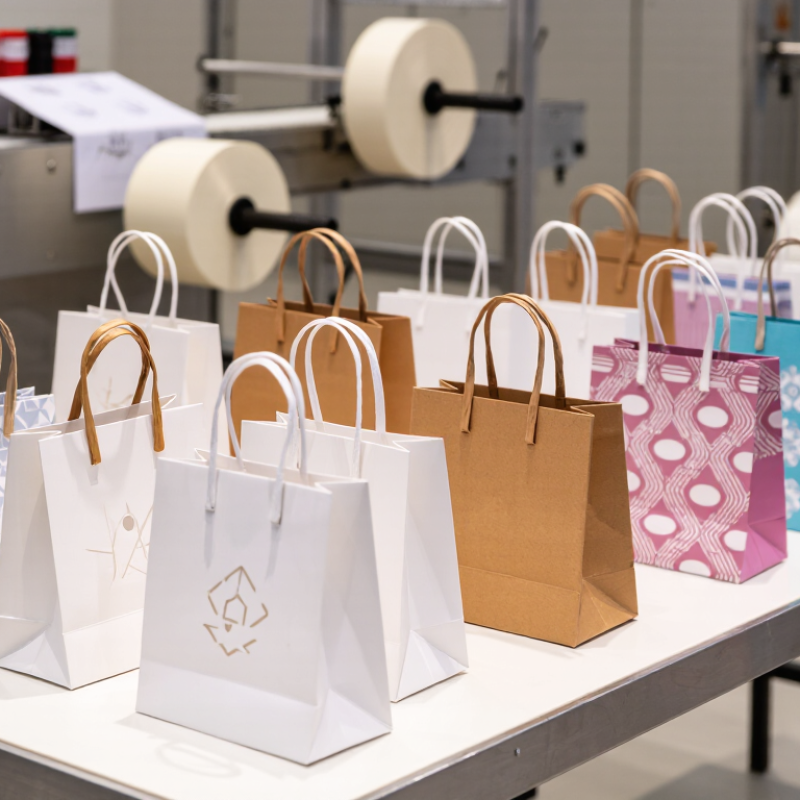
Top Printed Paper Bag Manufacturers in China?

What Defines a Leading Printed Paper Bag Manufacturer in China

A leading printed paper bag manufacturer in China is defined by more than attractive graphics. China Paper Association data reported paper and paperboard production above 140 million tonnes in 2023. This scale creates strong supply advantages, but capacity alone proves little. Reliable manufacturers control paper moisture, handle strength, ink adhesion, and colour consistency. They also provide test records, material specifications, and traceable batch information.

Smithers’ Future of Paper-Based Packaging to 2028 identifies sustainability, recyclability, and converting efficiency as major market drivers. A capable factory should therefore offer responsibly sourced paper options and water-based or low-migration inks when suitable. It should also explain limitations honestly. A recycled paper bag may show small shade differences. A heavily coated surface may reduce recycling efficiency. These details matter during real production, not only during sales discussions.

Tips: Request a pre-production sample, compression test, and colour standard. Ask how the factory handles paper humidity during storage. Check whether inspection reports match the delivered batch. A strong supplier welcomes these questions. Still, no manufacturer is perfect. Even experienced teams can miss a handle alignment or slight colour shift. Independent inspection remains useful, especially for large orders and tight retail deadlines. Supplier performance should be judged through repeatable evidence, not confident promises.

China’s Main Printed Paper Bag Manufacturing Regions

China’s Main Printed Paper Bag Manufacturing Regions

China’s printed paper bag production is concentrated around strong paper, printing, and export supply chains. Guangdong leads with clusters in Dongguan, Foshan, Guangzhou, and Shenzhen. These cities offer fast color printing, automated cutting, and convenient port access. They often serve food, retail, cosmetics, and promotional packaging orders.

Guangdong

Guangdong leads with clusters in Dongguan, Foshan, Guangzhou, and Shenzhen. These cities offer fast color printing, automated cutting, and convenient port access. They often serve food, retail, cosmetics, and promotional packaging orders.

Zhejiang

Zhejiang is another important region, especially around Wenzhou and Ningbo. Wenzhou supports flexible packaging and printing equipment suppliers. Ningbo provides efficient export logistics and a skilled converting workforce.

Fujian

Fujian, including Quanzhou and Xiamen, is known for footwear, food, and gift packaging.

Jiangsu

Jiangsu also deserves attention, with manufacturing capacity around Suzhou, Nantong, and Wuxi.

The China Paper Association reported approximately 141 million tonnes of paper and paperboard production in 2023.

This large material base supports competitive bag manufacturing. Smithers’ paper packaging outlook also expects continued growth through 2029, driven by e-commerce and fiber-based packaging demand.

Tips: Choose a region based on order size, delivery speed, and printing complexity. Ask for material certificates, compression tests, ink specifications, and production samples. Regional labels can oversimplify reality. A smaller factory may offer better quality control than a large cluster supplier. I would verify every claim through an independent factory audit. Even experienced buyers sometimes underestimate handle strength and moisture exposure.

Key Capabilities of Top Printed Paper Bag Manufacturers

Top Printed Paper Bag Manufacturers in China?

Key Capabilities of Top Printed Paper Bag Manufacturers

China’s leading printed paper bag manufacturers compete through process control, not decoration alone. Grand View Research valued the global paper bags market at approximately US$5.1 billion in 2023. It projects a 4.8% compound annual growth rate through 2030. This growth increases pressure on suppliers to deliver consistent printing, stronger handles, and dependable lead times.

Experienced factories usually offer flexographic, gravure, and digital printing. Each method suits different order volumes and artwork details. Digital printing supports short runs and quick design changes. Flexographic printing often improves efficiency for larger quantities. Skilled teams also control color using standardized references and documented proofing. Small differences still happen. Paper absorbs ink unevenly, especially near folded edges.

Material selection reveals deeper capability. Reliable manufacturers can provide kraft, coated, recycled, and grease-resistant papers for suitable applications. They should explain basis weight, tear resistance, moisture limits, and handle strength clearly. Food-contact projects require compliant inks, adhesives, and production controls. Recognized responsible-forestry certification can also support sourcing claims.

Smithers’ packaging outlook highlights fiber-based formats as important growth areas in sustainable packaging. However, sustainability claims need evidence. Buyers should request test reports, material declarations, factory inspection records, and batch samples. A beautiful sample proves little by itself. The better test is repeated production under real deadlines, with measurable rejection rates and packing inspections.

Top Printed Paper Bag Manufacturers in China: Key Capabilities

Typical technical ranges used to evaluate printed paper bag manufacturing capabilities.

Leading manufacturers commonly support 80–250 GSM paper, 1–8-color flexographic printing, 1–6-color offset printing, multiple handle constructions, and several finishing options. Actual ranges depend on equipment, order specifications, and product design.

How to Evaluate Quality, Customization, and Production Standards

Top Printed Paper Bag Manufacturers in China?

Evaluating a printed paper bag manufacturer requires more than viewing attractive product photos. Request physical samples with the same paper weight, ink coverage, handle type, and dimensions. Check the bag’s GSM, folding accuracy, glue strength, and resistance to tearing around the handles. Rub the printed surface with a dry cloth. Poor ink adhesion often appears there first. Short test. Ask for a color proof before mass production. Digital images can hide color shifts.

Customization should be measured against your actual packaging needs. Confirm the paper grade, gusset depth, opening size, handle length, and artwork tolerance. A reliable factory should provide a clear dieline and explain which details may weaken the bag. Request records for raw material inspection, production checks, and final sampling. Certifications can support credibility, but they should be verifiable and relevant to the product.

Production standards also involve communication. Review lead times, minimum order quantities, packaging methods, and corrective-action procedures. Ask how defective units are counted and replaced. A polished sample is not enough; factories can still change materials during a rushed order. I would also compare two production samples, not just one. This step may feel excessive. It is not. Small differences in paper stiffness or handle placement can affect loading, stacking, and customer experience. Keep written approval for colors, measurements, and acceptable defects before production begins.

Sourcing Considerations for International Buyers

Top Printed Paper Bag Manufacturers in China?

Sourcing Considerations for International Buyers

Selecting a Chinese paper bag manufacturer requires more than comparing unit prices. A reliable supplier should explain paper grades, printing limits, handle strength, and production capacity clearly. Ask for recent factory photographs, material samples, and a video inspection when travel is difficult. A polished sample can still hide weak seams or uneven color.

Request a pre-production sample matching your final artwork, dimensions, paper weight, and handle style. Check whether the bag stands upright on a flat table. Test the handles with the intended load, not an empty box. Confirm ink performance, folding accuracy, and surface consistency under normal handling. Small details matter. Some suppliers quote recycled paper, but the actual composition may need independent verification.

International buyers should also review minimum order quantities, tooling fees, lead times, export packaging, and payment milestones. Confirm trade terms in writing, including responsibility for damaged cartons and delayed shipments. An independent inspection before shipment can check quantity, dimensions, print registration, and random load performance. It adds cost, but a failed container costs more. Communication deserves careful judgment too. Fast replies are helpful, yet they do not prove manufacturing capability. Ask technical questions and compare the answers with the samples. I have seen purchasing plans focus heavily on price and overlook port delays, seasonal capacity, and artwork changes. That oversight is easy to repeat. A transparent supplier may admit limits, suggest revisions, and document each approval before mass production.

Top Printed Paper Bag Manufacturers in China? – Sourcing Considerations for International Buyers
Sourcing Dimension Typical Industry Range or Requirement What International Buyers Should Verify Purchasing Implication
Paper Material Kraft paper commonly ranges from approximately 70–180 g/m² for retail bags. Recycled, virgin-fiber, bleached, and brown kraft options are widely available. Confirm paper type, basis weight, recycled content, fiber origin, color consistency, tear resistance, and whether the material complies with the destination market’s packaging rules. Heavier paper improves strength but increases unit weight, freight cost, and material consumption.
Bag Construction Common formats include flat-handle, twisted-handle, rope-handle, block-bottom, and pinch-bottom bags. Reinforced bases and handle patches are used for heavier products. Request load-testing results using the buyer’s actual product weight and dimensions. Check handle attachment, bottom folding, side seams, and resistance to repeated carrying. Structural reinforcement may raise the unit price but reduces returns and damage during retail use.
Printing Capability Flexographic printing is commonly used for economical one- or two-color production. Offset or specialty printing is suitable for more detailed graphics and premium finishes. Confirm the printing process, maximum colors, print area, registration tolerance, color approval procedure, and whether production samples are available before mass manufacturing. More colors, larger print coverage, and tight registration generally increase setup and production costs.
Minimum Order Quantity Standard printed paper bags may be quoted from several thousand pieces per design, while custom sizes, special handles, and premium finishes often require higher quantities. Ask whether the minimum quantity applies per size, color, artwork, or shipment. Confirm overrun and shortage tolerances in the purchase agreement. Larger orders usually reduce unit cost, but they increase inventory exposure and storage requirements.
Sampling and Approval Pre-production samples are normally used to confirm dimensions, paper feel, handle strength, print appearance, and packaging method. Require a signed or digitally approved sample specification covering dimensions, material, artwork, colors, handles, tolerances, and packing details. Sample charges may be refundable against a confirmed production order, but this should be agreed in writing.
Production Lead Time Standard repeat orders may require approximately 15–30 days after artwork and specifications are approved. New tooling, special materials, or peak-season demand can extend this period. Separate the timeline for sampling, material procurement, production, inspection, and export handling. Obtain a written shipment date rather than relying on a general estimate. Buyers should add time for international transit, customs clearance, and possible inspection or rework.
Quality Control Key inspection points include dimensions, paper basis weight, print quality, handle attachment, bottom strength, moisture damage, quantity, and carton condition. Use an approved inspection checklist and define acceptable quality limits before production. Independent pre-shipment inspection is advisable for larger orders. Clear acceptance criteria help prevent disputes over color variation, minor creases, incorrect dimensions, or packing shortages.
Food-Contact Suitability Paper bags intended to directly contact food may require suitable paper, inks, adhesives, and coatings, depending on the destination market and application. Request relevant declarations of compliance, test reports, migration information, and details of all inks, adhesives, coatings, and recycled fibers used. Food-service applications may require higher-cost materials and additional laboratory documentation.
Sustainability Documentation Common buyer requirements include recycled-content evidence, responsible-fiber certification, water-based or low-impact inks, and recyclable construction. Verify certificate scope, validity, chain-of-custody information where applicable, recycled-content claims, and whether handles, adhesives, and coatings affect recyclability. Environmental claims should be supported by documentation suitable for the destination market’s advertising and labeling rules.
Packaging and Container Loading Bags are commonly packed in inner bundles and export cartons. Carton size, gross weight, and stacking method affect container utilization. Confirm pieces per bundle and carton, carton dimensions, gross and net weight, moisture protection, pallet requirements, and loading photographs when appropriate. Efficient packing can reduce dimensional freight charges and improve protection during ocean or air transport.
Export Documentation Typical documents include a commercial invoice, packing list, transport document, and any certificates or test reports required by the buyer or importing country. Confirm the exporter’s legal entity, product description, harmonized tariff classification, country-of-origin information, and document responsibilities under the selected Incoterm. Document errors can delay customs clearance or create unexpected import costs.
Payment and Trade Terms International transactions may use a deposit and balance structure, documentary payment, or another mutually agreed arrangement. Common Incoterms include EXW, FOB, CIF, and DAP. Compare the total landed cost, clarify which party pays export charges and freight, and ensure artwork approval, inspection, and balance-payment conditions are written into the contract. The lowest factory quotation may not be the lowest landed cost after freight, duties, inspection, and local delivery are included.
Supplier Verification A reliable supplier should provide consistent technical information, traceable quotations, samples, factory or production evidence, and responsive communication. Check business registration details, production capability, relevant export experience, audit results, references, sample consistency, and the identity of the contracting and receiving parties. Verification reduces the risks of unauthorized subcontracting, inconsistent quality, payment fraud, and delivery failure.

Note: The ranges above are indicative sourcing benchmarks rather than quotations from any specific manufacturer. Final specifications, compliance requirements, pricing, minimum order quantity, and lead time should be confirmed in writing for each project.

FAQS

What printing methods are suitable for custom paper bags?

Digital printing suits short runs and frequent artwork changes. Flexographic printing often fits larger quantities. Gravure printing can support detailed, repeated designs. The best choice depends on volume, color needs, and budget.

How can buyers check print quality before production?

Request a physical proof using the final paper and ink coverage. Rub the printed area with a dry cloth. Weak ink adhesion may appear quickly. Color shifts can remain hidden on digital screens.

Which paper details should a buyer confirm?

Confirm paper type, GSM, tear resistance, moisture limits, and handle strength. Kraft, coated, recycled, and grease-resistant papers serve different purposes. Thicker paper is not always better. It may increase cost or reduce folding flexibility.

What should be tested around the handles?

Check glue strength and tearing around each handle attachment. Load the bag with a realistic product weight. Lift it several times. Handle placement can affect balance and stacking.

How should customization requirements be documented?

Confirm dimensions, gusset depth, opening size, handle length, and artwork tolerance. Ask for a clear dieline before approval. Some small design details can weaken folded areas. I might overlook this during a rushed review.

What evidence supports responsible material or sustainability claims?

Request material declarations, test reports, batch samples, and factory inspection records. Relevant forestry documentation may support sourcing statements. A beautiful sample proves little alone. Evidence matters more than green wording.

How can buyers evaluate production consistency?

Compare at least two production samples with identical specifications. Inspect folding accuracy, glue points, color, and paper stiffness. Review rejection rates and final sampling records. Small differences may affect customer experience.

What production and communication terms need written approval?

Confirm lead time, minimum order quantity, packing method, and replacement procedures. Define acceptable defects before mass production. Approve colors and measurements in writing. Written details reduce avoidable arguments later.

Are food-related paper bags subject to extra checks?

Yes. Confirm suitable inks, adhesives, paper materials, and production controls. Request relevant compliance documents before ordering. Do not assume ordinary packaging is suitable. The paper may look clean, yet still require verification.

Conclusion

China is home to a wide range of capable Printed Paper Bags manufacturers serving retail, food service, fashion, promotional, and packaging markets. A leading manufacturer is defined by reliable production capacity, modern printing technology, skilled quality control, responsible material sourcing, and the ability to deliver consistent results at different order volumes. Major manufacturing regions often benefit from strong paper, printing, machinery, and logistics supply chains, helping buyers access efficient and flexible production services.

When evaluating suppliers, international buyers should examine paper quality, printing clarity, structural strength, handle options, finishing techniques, customization support, sampling procedures, and production standards. Clear communication about specifications, order quantities, lead times, packaging, inspections, and shipping arrangements is also essential. By comparing technical capabilities, quality management, customization flexibility, pricing transparency, and export experience, buyers can select a dependable partner that meets both project requirements and long-term sourcing expectations.


Aria

Aria

Aria is a dedicated marketing professional with a deep passion for innovative strategies and a keen understanding of our company's product offerings. With a wealth of experience in the industry, Aria excels at crafting engaging content that highlights the unique features and benefits of our......