Paper Bags With Logo are used far beyond simple product carrying. In retail stores, they hold clothing, books, cosmetics, and small household items. At checkout, a clean bag can turn an ordinary purchase into a visible brand experience. Its printed logo may appear on a busy shopping street, inside an office, or beside a customer’s front door. That repeated exposure supports recognition without demanding a separate advertisement.
They are also common at cafés, bakeries, markets, exhibitions, and corporate events. A bakery might use a compact kraft bag for warm pastries, while a fashion shop may choose thicker paper with twisted handles. Packaging professionals usually recommend matching the bag’s size, strength, paper weight, and printing method to its actual use. Food contact requirements, ink suitability, recycled content, and local packaging rules deserve careful review. Appearance matters, but function matters more.
A logo is not enough.
A weak handle can damage trust quickly. Excessive printing can also reduce the environmental value customers expect from paper packaging. Paper Bags With Logo may support brand visibility, yet they are not automatically sustainable or cost-effective. Businesses should test samples, inspect seams, and confirm carrying performance before placing a large order. It is easy to overlook these details. Reliable packaging decisions come from practical testing, clear specifications, and honest attention to both customer experience and environmental limits.
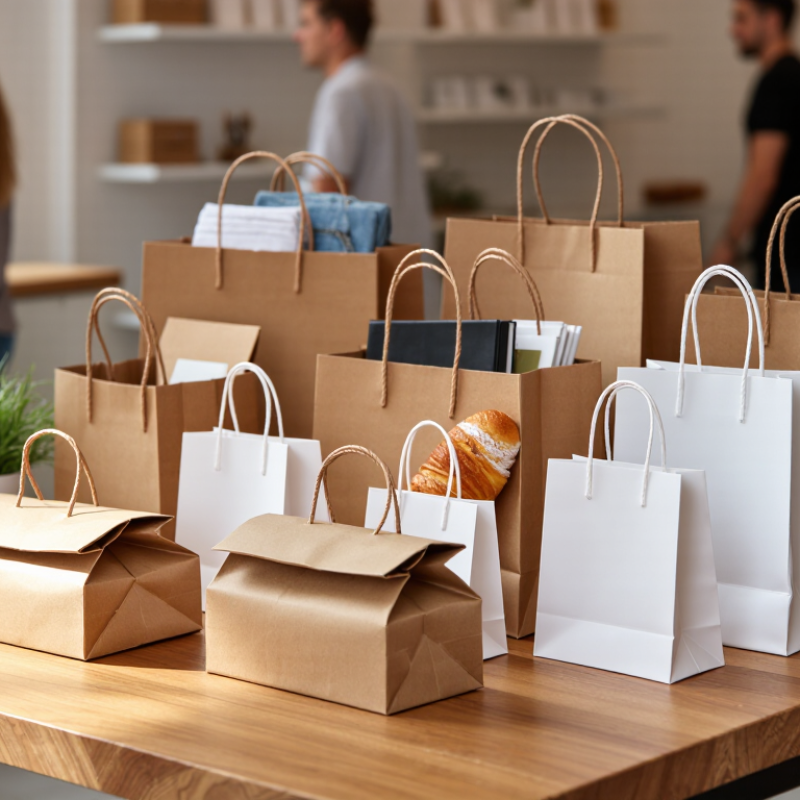
Paper bags with logos are printed paper carriers that display a business name, symbol, or visual message. They help customers recognize where a purchase came from. The logo may appear on one side, both sides, or across the entire bag. In daily retail use, these bags carry clothing, books, gifts, takeaway meals, and small household items. The message is immediate.
Their purpose extends beyond carrying products. A well-designed bag can support store recognition as customers walk through streets, offices, or shopping areas. It can also create a more organized experience at a counter. Packaging specialists usually consider paper weight, handle strength, print quality, and bag size together. A dark logo on textured kraft paper may feel warm and practical. A clean, single-color design can look more professional. Small details matter.
A common mistake is treating the logo as the most important feature. It is not. A sharp image cannot fix weak handles or a bag that tears under normal weight. Moisture can also reduce paper strength. Claims about recyclability should match the actual paper, coating, ink, and local collection systems. Paper bags with logos are useful, but they are not perfect. Good packaging requires honest testing, readable design, and enough material for the intended product.
What Are Paper Bags With Logo Used For?
Logo-printed paper bags turn everyday purchases into mobile advertising. Retailers use them for clothing, cosmetics, books, takeaway food, and small gifts. A clear logo helps customers recognize the business after leaving the store. It also creates a more consistent experience across counters, delivery orders, and local events. Two Sides’ 2023 Trend Tracker found that 82% of consumers view paper and cardboard packaging as more sustainable than other materials. That perception can support a responsible brand message, but it should not replace real environmental action.
Businesses also use logo bags to improve presentation. A thick kraft bag can hold folded garments, while reinforced handles suit heavier products. A QR code may guide customers to care instructions, menus, or membership pages. The FAO’s FAOSTAT forestry database records more than 400 million tonnes of global paper and paperboard production annually. That scale shows why material choices deserve attention. A logo alone is not enough. A beautiful bag can still feel wasteful if it is oversized, difficult to recycle, or used for one tiny item.
Tips: Match the bag size to the product. Use water-based inks when suitable. Test handles with the heaviest normal order. Keep essential text readable from a short distance. Ask suppliers about recycled content, fiber sourcing, and local recycling conditions. Small businesses should order cautiously; unused bags can become expensive storage. That is an easy detail to overlook.
Common business applications, suitable bag formats, and practical branding considerations
| Business Use | Typical Items Carried | Suitable Paper Bag Format | How the Logo Is Used | Key Practical Considerations |
|---|---|---|---|---|
| Retail Purchases | Clothing, books, cosmetics, accessories, and packaged goods | Flat-handle bag Twisted-handle bag |
Identifies the store after the customer leaves and reinforces visual recognition in public spaces | Choose a size that fits the product securely; use reinforced handles for heavier items |
| Foodservice Takeaway | Prepared meals, bakery products, snacks, and beverage carriers | SOS paper bag Grease-resistant bag |
Displays the business identity on orders carried from the counter or delivered to customers | Paper should be suitable for food contact where required; ventilation and leak resistance may be important |
| Cafés and Bakeries | Pastries, bread, sandwiches, coffee accessories, and small gift items | Small kraft bag Window bag |
Creates consistent packaging across in-store purchases and takeaway orders | Use dimensions that protect delicate products without excessive empty space |
| Gift Packaging | Gift boxes, seasonal products, greeting cards, and small retail items | Decorative handled bag Premium kraft bag |
Turns the package into part of the gift presentation and communicates the business identity | Colored paper, printed patterns, tissue paper, and sturdy handles can improve presentation |
| Trade Shows and Events | Brochures, catalogs, samples, promotional materials, and small products | Medium handled bag Large capacity bag |
Provides a visible carrying solution that helps attendees identify the exhibitor while moving around the venue | Prioritize durability, readable printing, and a size compatible with event materials |
| Product Launches | Launch kits, samples, information cards, and promotional merchandise | Custom-size bag Premium printed bag |
Supports a coordinated launch presentation and keeps package graphics consistent with campaign materials | Confirm artwork dimensions, print colors, and production lead times before ordering |
| Corporate Gifts | Documents, hospitality items, gift sets, and event materials | Reinforced handle bag Rigid-bottom bag |
Provides a professional presentation while making the sender identifiable | Use a suitable load capacity and select paper thickness based on the contents |
| Delivery and Collection Orders | Online orders, prepared food, household products, and customer collections | Self-standing bag Tamper-evident closure bag |
Helps customers recognize the order source and maintains consistent packaging across sales channels | Consider closure security, stacking stability, moisture exposure, and transport conditions |
| Market Stalls and Pop-Up Shops | Handmade products, clothing, food items, crafts, and small accessories | Compact kraft bag Reusable-style paper bag |
Extends brand visibility beyond the temporary selling location | Choose practical sizes for varied purchases and keep the logo clear at normal carrying height |
| Sustainable Packaging Programs | Retail products, takeaway orders, and promotional materials | Recyclable paper bag Recycled-content bag |
Communicates the business identity while supporting a paper-based packaging format | Environmental claims should accurately describe the paper, inks, coatings, handles, and local recycling conditions |
Branded paper bags appear across many industries because they combine carrying space with visible business identity.
In clothing and footwear stores, they protect folded garments and help customers carry purchases through busy streets.
A sturdy handle matters when bags hold shoes, coats, or several smaller items.
Food service businesses use them for takeaway meals, bakery boxes, and packaged drinks.
Paper bags can separate warm food from other goods and support cleaner handover practices.
However, restaurants must choose suitable paper strength and coatings.
A weak base can fail quickly.
That detail is easy to overlook.
Cosmetics shops, gift stores, and specialty retailers also use branded bags to create a consistent customer experience.
The printed color, handle texture, and bag size can match the shop’s packaging.
Pharmacies and health retailers may use simpler designs, especially when privacy and practical handling matter.
Event organizers use paper bags for brochures, samples, and small visitor materials.
They often add recyclable inserts or printed schedules.
Not every industry needs an elaborate design.
A clear logo and readable contact details may work better than heavy decoration.
From a packaging perspective, businesses should test bags with real product weights before ordering large quantities.
A polished appearance cannot fix poor construction.
Sometimes, the bag itself becomes part of the customer’s memory.
That is useful, but it should not replace reliable service.
Paper bags with logos do more than carry purchased items. They turn ordinary movement into repeated brand exposure. A customer may carry one through a shopping street, office lobby, or busy train station. Each visible bag presents the business name, colors, and visual style to nearby people.
Recognition grows when customers meet the same visual details across different experiences. A clear logo on a sturdy paper bag can reinforce memory after a purchase. Consistent colors and readable lettering also help customers connect the package with the service they received. The bag becomes a quiet reminder.
Small details matter. A logo placed near eye level is easier to notice. Balanced spacing can make the design feel more professional. Strong paper handles improve comfort and reduce the chance of damage during travel. However, a logo bag is not magic. A crowded design may confuse people, while poor printing can weaken trust. Packaging teams should test the bag under daylight, indoor lighting, and real carrying conditions.
The most useful designs match the customer’s expectations. A neat bag may support a premium service, while a simple design can communicate practicality. Size also matters. An oversized bag may waste material and feel awkward. A narrow bag may not protect the product properly. These choices require review, not assumptions. Even a well-designed logo deserves another look after production. Fresh eyes often find problems that the original designer missed.
Paper bags with logos carry products, but their design shapes how people judge a business. Their use depends on product weight, shopping habits, and disposal systems. A small paper bag suits cosmetics or takeaway items. A reinforced kraft bag better supports books, clothing, or glass containers. Handles also matter. Twisted paper handles feel practical, while flat handles reduce material and storage space.
Several factors influence performance. Paper weight must match the load without making the bag unnecessarily heavy. The logo needs strong contrast and clear spacing, especially under weak store lighting. Moisture resistance can improve durability, but coatings may complicate recycling. The 2023 report The Future of Paper Packaging to 2028 valued the wider paper packaging market at about 402 billion dollars. It forecasts nearly 503 billion dollars by 2028. CEPI reported an 82.5% European paper recycling rate in 2023. These figures support paper’s commercial potential, yet recycling depends on local facilities. A recyclable design is not automatically recycled. Packaging reviews often reveal this gap.
Tips: Test the bag with its real product weight. Check handle comfort after ten minutes of carrying. Use fewer colors when possible. Confirm whether inks and coatings fit local recycling guidance. A visually impressive bag can still fail through weak handles, poor balance, or oversized dimensions. Designers sometimes prioritize appearance too much. That mistake deserves another review.
Paper bags with logos are commonly used for retail packaging, takeaway orders, groceries, events, and promotional distribution. Their design is mainly influenced by carrying strength, product size, moisture exposure, branding needs, sustainability goals, and production cost.
The chart uses a practical relative-priority index from 1 to 5. A higher score indicates a stronger influence on paper bag design and everyday use.
They are paper carriers printed with a business name, symbol, or visual message. The logo may cover one side, both sides, or the entire bag.
They commonly carry clothing, books, gifts, takeaway meals, cosmetics, and small household items. Match the bag size to the product.
A visible bag repeats the business name and colors in streets, offices, shops, and transport areas. It becomes a quiet reminder.
No. A sharp logo cannot repair weak handles, poor sizing, or paper that tears under normal weight. The design is only one part.
Check paper weight, handle strength, bag dimensions, printing quality, and moisture resistance. Test the heaviest normal order, not an ideal one.
Yes, when it feels sturdy and comfortable at the counter. A clean design and readable text can make the purchase feel more organized.
No. Sustainability depends on paper content, coatings, ink, reuse, and local collection systems. Honest claims matter.
Avoid crowded artwork, tiny text, oversized bags, and weak contrast. Test the bag in daylight and indoor lighting. Fresh eyes help.
Not always. Large orders can leave unused bags in storage when packaging needs change. Smaller test orders may reduce waste, though unit costs can rise.
Yes. Moisture can weaken paper and handles, especially around takeaway food or wet products. Protective materials may help, but they need practical testing.
Paper Bags With Logo are practical packaging tools that combine everyday convenience with visual communication. They are commonly used by businesses to carry products, organize purchases, and create a more professional customer experience. By displaying a company’s logo, colors, or simple design elements, these bags can help customers recognize the business and remember it after leaving the store. They may also support promotional activities, events, takeout services, retail sales, and customer gifting.
The design and use of branded paper bags depend on factors such as bag size, paper strength, handle style, printing quality, color selection, budget, and the type of products being carried. Different industries may choose different formats to match their products and customers’ expectations. A well-designed bag should be functional, easy to carry, and visually consistent with the business’s overall identity. When selected thoughtfully, logo-printed paper bags can improve presentation, encourage repeated visibility, and provide a practical way to communicate a professional image.

Miji