Explore our premium grade materials customized to exact brand and mechanical standards.
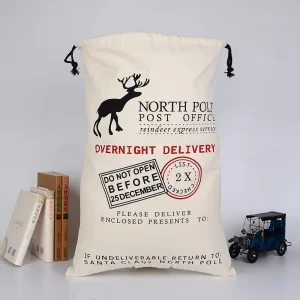
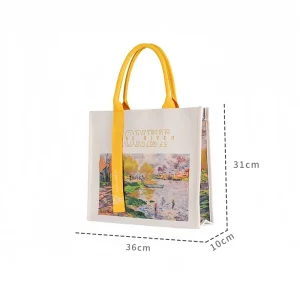
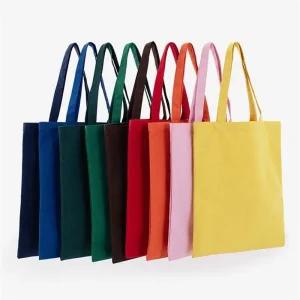
The global market for industrial-grade woven packaging and retail tote bags is experiencing a massive paradigm shift. As single-use plastics are systematically phased out by legislative bodies worldwide—notably through the European Union’s Circular Economy Action Plan and similar municipal bans across North America—the demand for high-strength, reusable, and circular polymer structures has surged. Modern B2B packaging is no longer just a vessel; it is a critical component of carbon-accounting structures and brand trust.
Specifically, weaved polymer bags, manufactured from Polypropylene (PP) and Polyethylene Terephthalate (PET), have emerged as the gold standard for heavy-duty retail packaging, agricultural shipping, and high-end brand presentations. By shifting from standard extrusion films to high-density woven matrices, manufacturers can achieve unparalleled tensile strength, puncture resistance, and repeated load cycles.
Furthermore, the integration of post-consumer recycled (PCR) materials into the weaving matrix has transformed the supply chain. Woven bag configurations are now designed for loop systems, allowing circular collection, decontamination, re-pelletization, and re-weaving, minimizing environmental depletion without sacrificing durability.
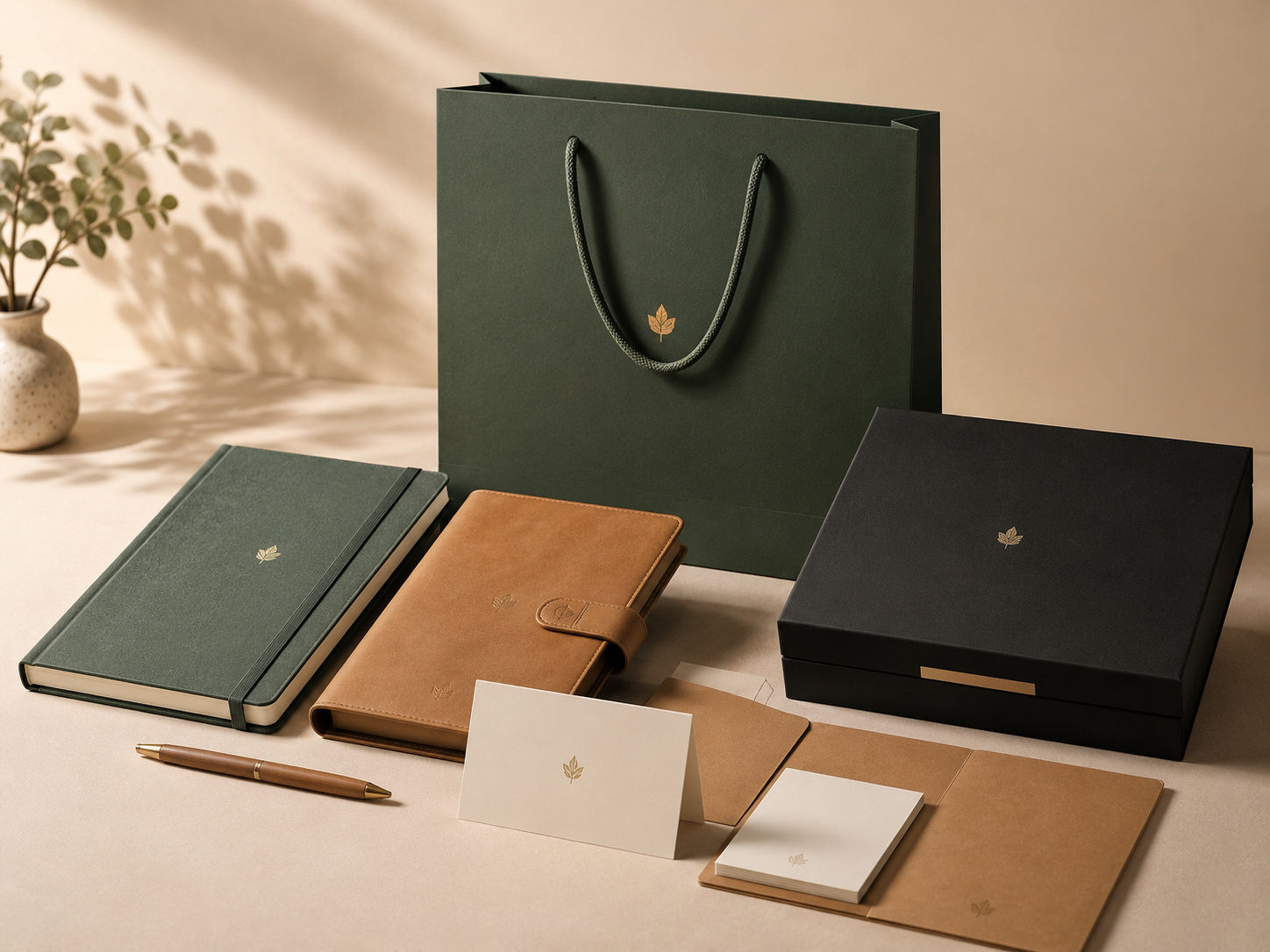
How multinational companies balance volume, structural integrity, custom design, and strict international compliance standards.
Global corporations face severe liabilities if imported packaging materials contain prohibited plasticizers, heavy metals, or volatile organic compounds (VOCs).
Standard bags often experience structural failure along handle seams and base folds under high dynamic loads, compromising product safety.
Unpredictable transit schedules, packaging damage during ocean freight, and lack of real-time material origin data disrupt retail product launches.
Connecting state-of-the-art packaging systems and corporate brand customization with global trade networks.
Yiwu Miji Trading Co., Ltd. (MIJI) is an industry-leading packaging and custom corporate assets provider. We serve as a trusted bridge between raw industrial capacity and refined consumer brand packaging. With custom-tailored projects encompassing high-end notebooks, composite paper bags, premium gift sets, and reusable woven bags, MIJI delivers custom solutions to overseas brands, corporate distributors, and promotional gift organizations.
Our manufacturing backbone is centered in the prestigious Wenzhou Longgang Packaging & Printing Industrial Park. Spanning a modern facility of over 5,000 square meters, our factory houses state-of-the-art fully automated production machinery. By maintaining high-precision automation throughout our printing, folding, binding, cutting, and stitching operations, we significantly reduce human error while preserving high material output and reliable, on-time delivery schedules.
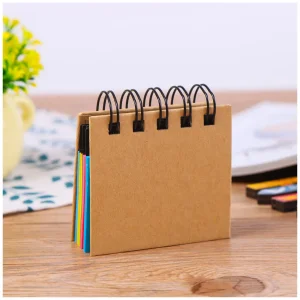
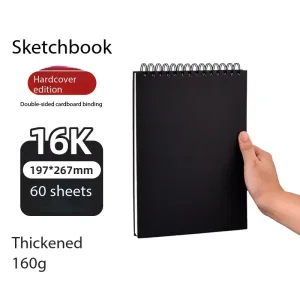
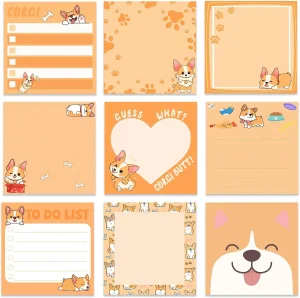
Hardcover, soft PU leather, spiral bound, planner formats, and sketching paper structures designed for unique corporate identities.
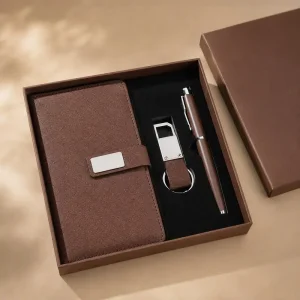
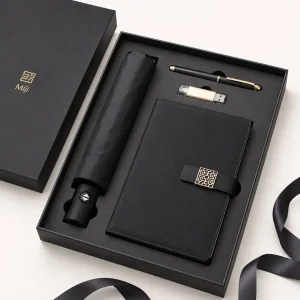
Seamlessly matched collections pairing custom journals with umbrellas, writing instruments, power banks, and matching bags.
High-tensile Kraft and premium virgin boards matching customized boxes, ensuring a unified brand presentation.
Supporting brands with options starting at low MOQs, alongside high-capacity production lines for global fulfillment.
Deep-dive specifications of weaved tote bags, lamination coatings, and print options.
Creating an industrial-grade weaved bag requires absolute control over polymer science, extrusion mechanics, and finishing aesthetics. From calculating the optimal Denier (unit of linear mass density of fiber) to choosing printing inks, we optimize every detail of the bag's profile:
We employ virgin and post-consumer recycled PP (Polypropylene) and RPET (Recycled Polyethylene Terephthalate) resins. The polymer is extruded into ultra-thin ribbons, which are then stretched under high-temperature conditions to align the molecular structure. This provides the ribbons with their high tensile capacity before they are woven on circular looms into seamless fabrics.
| Specification Parameter | Woven Polypropylene (PP) | Woven RPET (Recycled Polyester) | Heavy Cotton / Canvas |
|---|---|---|---|
| Base Weight Range | 80 GSM - 180 GSM | 100 GSM - 170 GSM | 12oz (approx. 340 GSM) - 16oz |
| Tensile Strength (Warp / Weft) | High (≥ 850 N / 5cm) | Very High (≥ 950 N / 5cm) | Medium-High (≥ 600 N / 5cm) |
| Water Resistance | Waterproof (when laminated) | Waterproof (when laminated) | Water repellent (treatment required) |
| Printing Support | BOPP Lamination, Screen Print | Sublimation, BOPP Lamination | Silk Screen, Heat Transfer |
| Recycled Material Content | Up to 70% PCR (Post-Consumer) | 100% GRS Certified Recycled | Organic/Recycled Cotton available |
To protect the woven weave and host high-fidelity printing, a BOPP (Biaxially Oriented Polypropylene) film is heat-laminated to the woven surface. This creates a barrier layer that is 100% waterproof and allows for photographic-quality gravure printing.
A systematic process from material formulation to global logistics fulfillment, ensuring absolute quality control.
Define your packaging dimensions, target load capacity, expected volume, material type (PP, RPET, paper, or cotton), and logistics terms (FOB, CIF, DDP).
Select the optimal GSM weight, handle construction (nylon, PP webbing, or cotton webbing), and printing configurations (BOPP, screen, or transfer).
Our design team reviews and positions vector graphics, ensuring color accuracy (Pantone validation) and optimal registration for gravure/flexographic machinery.
Manufacture a physical prototype to verify material thickness, print quality, and tensile integrity before committing to full production.
High-speed circular weaving and automated stitching lines commence production. Every batch undergoes strict tensile testing and print inspection checks.
Bags are compressed and packed in heavy-duty moisture-proof cartons, arranged on pallets, and loaded into containers for global shipment.
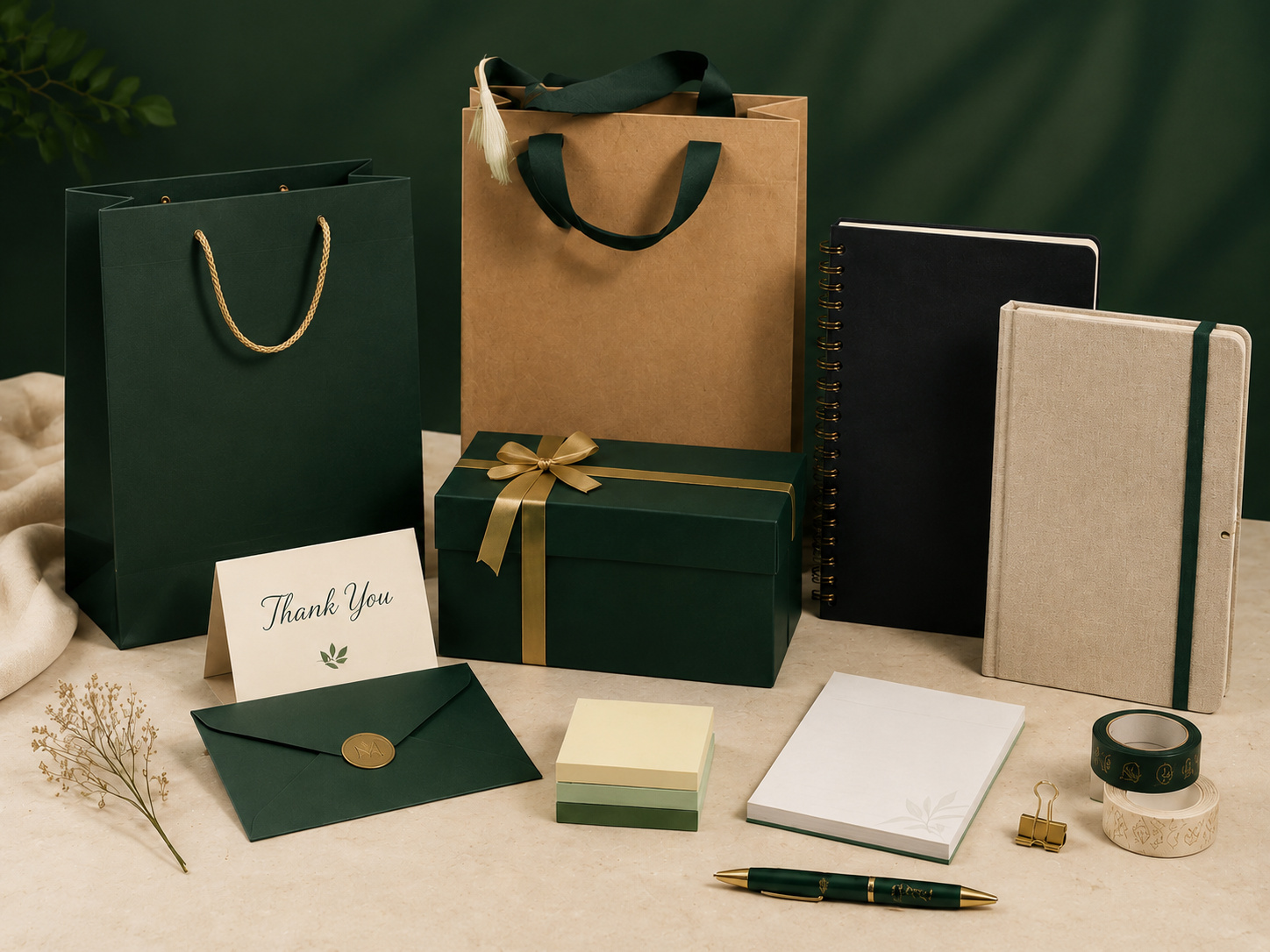
As polymer technology evolves, MIJI is proactively adapting its manufacturing methods to meet future regulatory demands. Our technical roadmap focuses on three main developments:
1. Monomaterial Packaging Designs: Historically, weaved bags combining PP substrates with PE liners and cotton thread were difficult to recycle. By shifting to 100% monomaterial designs (where handles, stitching thread, and lamination films are all derived from the same polymer family), we ensure the entire bag can be recycled directly without separation.
2. Bio-Derived & Compostable Polyesters: We are testing and developing weaved bags using Poly Lactic Acid (PLA) polymers. These structures provide the same strength as PP but break down under industrial composting conditions, offering an excellent alternative for high-end retail packaging.
3. Low-Impact Water-Based Ink Application: We have transitioned our printing lines to use water-based inks instead of solvent-based variants. This reduces VOC emissions by 90%, protects our workers, and ensures that the final packaging meets strict indoor storage air-quality criteria.
Crucial industrial data points, lead times, customize parameters, and supply chain logistics explained.
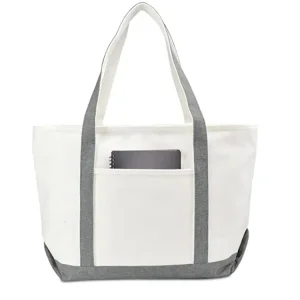
Premium canvas, luxury jewelry carriers, non-woven composites, and specialized corporate paper accessories.
 Miji
Miji