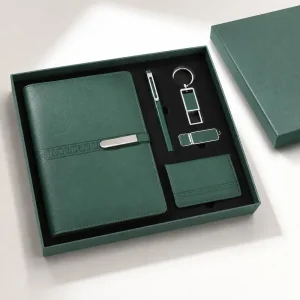
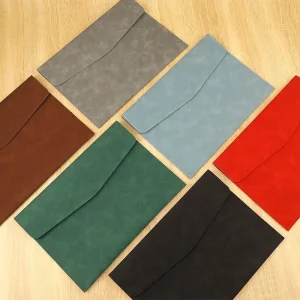
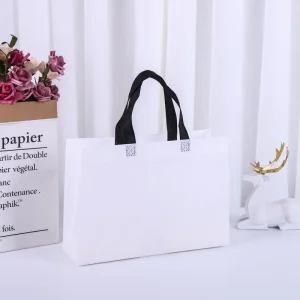
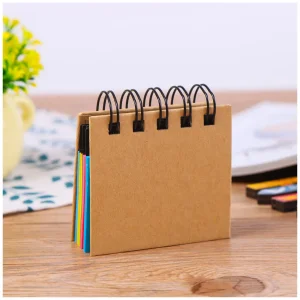
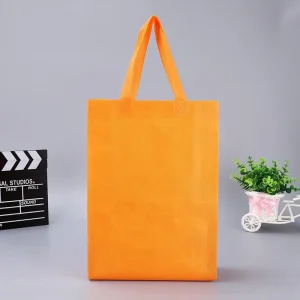
Explore our foundational range of customizable notebooks, custom business kits, and eco-friendly packaging units designed for dynamic global distribution networks.
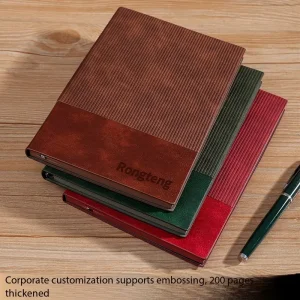
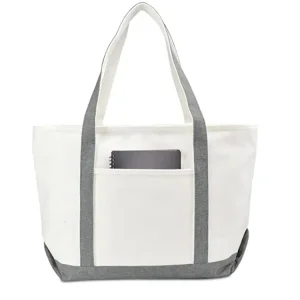
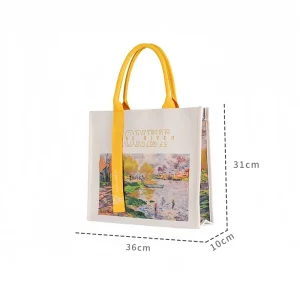
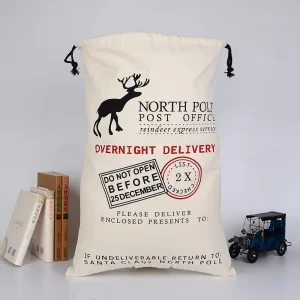
In an increasingly digitized world, the tactile authority of premium paper products remains a cornerstone of professional, academic, and executive corporate environments. The global market for commercial stationery, specifically customized paper notebooks, leather journal sets, and coordinate premium shopping carriers, has transitioned from general-commodity products to high-specification, brand-aligned marketing collateral. Procurement officers, retail executives, and brand administrators now demand raw material provenance, specialized page-finish configurations, and sustainable manufacturing standards.
Located at the epicentre of precision printing manufacturing, in the Wenzhou Longgang Packaging & Printing Industrial Park, Yiwu Miji Trading Co., Ltd. (MIJI) manages advanced manufacturing footprints covering 5,000 square meters. By integrating high-capacity automation lines with meticulous handmade binding finishes, the manufacturing plant supports international supply chains spanning North America, Western Europe, Southeast Asia, and Oceania.
Modern corporate buyers must verify the environmental certification of raw paper pulp (FSC-certified) and check the mechanical tolerances of Smyth sewn binding. Cheap processing results in binding breakage and yellowing page edges over brief shelf lives. High-grade wood-free offset paper preserves structural stability and remains neutral to chemical inks.
Environmental responsibility is no longer a corporate afterthought—it is a baseline procurement requirement. The wholesale stationery sector is currently undergoing a structural transformation toward circular-economy materials:
Replacing petroleum-based polymers with organic materials like plant starch (PLA), cotton canvas, and FSC-certified unbleached Kraft paper. Sourcing is moving away from post-industrial waste towards regenerative primary materials.
Merging offline handwriting with online database platforms through specialized page layouts. Grid structures are optimized for smart optical character recognition (OCR) scanning via enterprise workflow apps.
Transitioning away from heavy metal-based inks towards soy-derived oil solvents. Soy inks emit up to 80% fewer volatile organic compounds (VOCs) and simplify the enzymatic de-inking step during paper recycling.
| Parameter | Standard Commercial Grade | MIJI Premium / FSC Specification |
|---|---|---|
| Paper Base Weight (GSM) | 70 GSM - 80 GSM (Common Wood-Pulp) | 80 GSM - 120 GSM (Acid-Free Wood-Free Offset) |
| Ink Bleed Resistance | Moderate (Feathering occurs with fountain pens) | High (High opacity, anti-feathering surface sizing) |
| Cover Material | Low-grade PVC or vinyl synthetics | Thermo-reactive PU, Top-grain split leather, Eco Cotton |
| Binding Assembly | Standard EVA glue perfect bound | Smyth Sewn (180-degree flat lay) / Heavy coil spiral |
Achieving consistent color calibration, crisp foil embossing, and robust cover structural integrity requires optimized, computer-controlled production steps. At our Wenzhou facility, paper stocks undergo automated temperature-controlled drying to control relative humidity levels, preventing warping in humid shipping environments.
Precision magnesium plates apply high-pressure heat to cure foils directly into PU leather or canvas fibers, producing clean logo resolutions that resist peeling under friction.
Proprietary dynamic edge-gilding machines treat all three exposed outer notebook sides, sealing the inner pages against moisture and integrating company branding.
High-speed rotary press modules print custom templates, including dotted matrices, weekly tracking layouts, ruled lines, and dedicated fields for project management.
From product selection and material matching to bulk logistics coordination, our 6-step project management lifecycle ensures precision and transparency at every milestone.
Submit your brand guidelines, approximate volume requirements, dimensions, target pricing, and functional application criteria.
Select your base materials, page grammage (80-120 GSM), binding styles (Smyth, spiral), color matching, and internal grids.
Our design engineers generate detailed digital proofs showing logo placements, stitching offsets, packaging layouts, and dimensional details.
Physical pre-production samples are assembled and shipped for structural, print quality, and finish verification before bulk runs.
Automated run cycles are monitored. Our QC teams verify print alignment, stitching density, glue integrity, and load-bearing parameters.
Finished goods are packaged in double-walled corrugated cartons with moisture-barrier liners, then dispatched via sea, air, or express freight.
Notebooks, canvas carriers, and packaging sets are not generic commodities; they are tailored productivity tools. Different industries require distinct configurations:
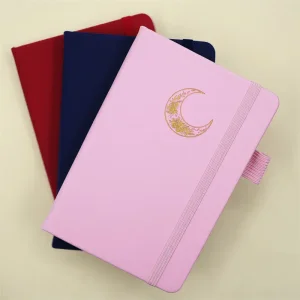
Tech brands require minimalist designs, often opting for soft PU covers with elastic closure bands, integrated pen loops, and dot-grid page layouts for architectural concept mapping and coding notes.
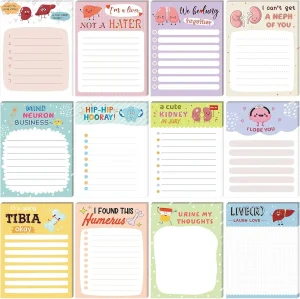
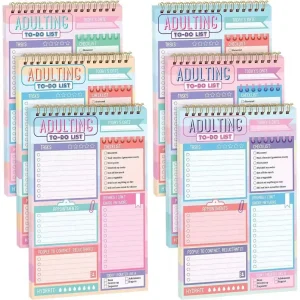
As shown in our specialized Nurses' Notebook and Nursing Sticky Notes, clinical environments need stain-resistant covers and compact layouts with references to medical indexes, patient charts, and vital signs trackers.
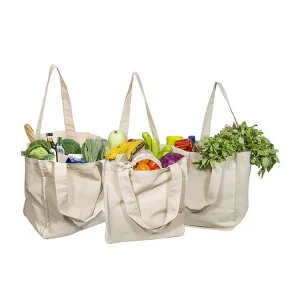
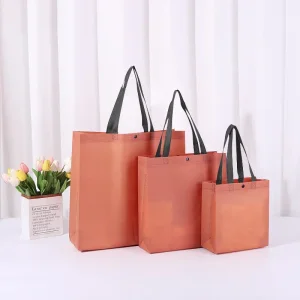
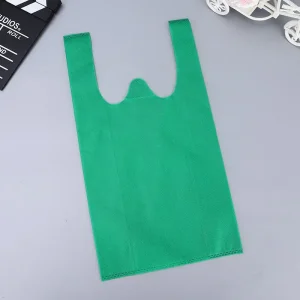
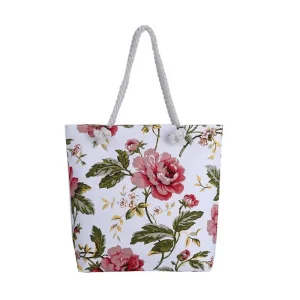
Fast-moving consumer brands choose screen-printed cotton canvas totes or high-yield non-woven shopping bags as eco-friendly giveaway packaging, replacing single-use plastics to align with zero-waste initiatives.
A: Standard customized notebook runs with custom cover material, Pantone color-matching, and printed inner pages start at an entry threshold of 50 pieces. For complex custom canvas carriers or bespoke printed bags, MOQ parameters vary by raw material specifications (ranging from 100 to 500 units).
A: We configure our notebooks with 80 GSM to 120 GSM premium wood-free offset paper. This stock undergoes a surface sizing process during production to reduce porosity, ensuring clean lines and minimal show-through when using fountain, gel, or rollerball pens.
A: Our QC program operates on a three-tier system: initial raw material inspections (verifying paper moisture and textile weight), inline checks at binding and heat-pressing stations, and final pre-shipment inspections of structural integrity, logo alignment, and packaging resilience.
A: Yes, our cotton canvas shopping totes are constructed from natural cotton fibers, making them fully machine-washable and reusable for extended lifecycles. Our non-woven shopping bags are manufactured from recyclable polypropylene (PP), offering a high-strength alternative to single-use plastics.
Explore our range of customizable everyday carry solutions, specialized sticky pads, and heat-sealed promotional non-woven bags.
 Miji
Miji