Engineered for durability, print precision, and heavy grocery/retail load capacities in line with US standard specifications.
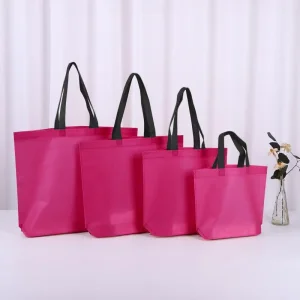
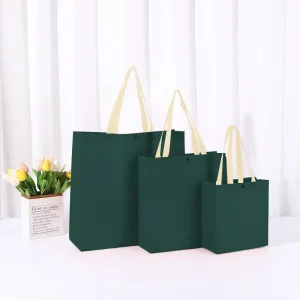
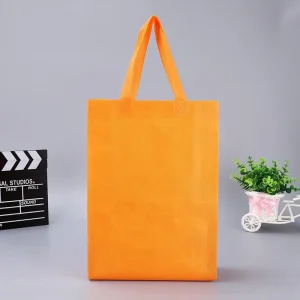
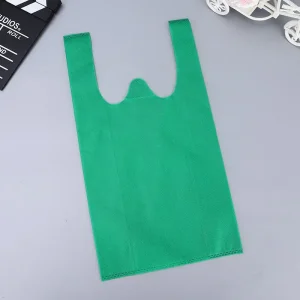
The landscape for consumer packaging in the United States has transitioned permanently. Driven by state-level legislations (such as the California SB 270, New York’s Bag Waste Reduction Act, and similar regulations in Washington, Oregon, and Hawaii), single-use thin-film plastic bags are rapidly being phased out. For supermarkets, department stores, quick-service food chains, and promotional organizations, sourcing durable polypropylene (PP) non-woven bags has shifted from a branding decision to a regulatory and logistics necessity.
As a leading supplier, we support US-based corporate buyers, distribution networks, and packaging wholesalers. Utilizing advanced production infrastructures in Wenzhou Longgang Packaging & Printing Industrial Park, our manufacturing capabilities bridge the gap between regulatory compliance, cost-efficiency, and strict quality control.
To be classified as a legal "reusable grocery bag" in most US jurisdictions, a non-woven carrier bag must meet strict physical criteria:
Our industrial production capabilities focus on two distinct processes designed to maximize bag lifecycle and durability:
Spunbond PP (Non-Laminated): Manufactured by extruding melted polypropylene into thin continuous filaments, which are then laid down in a web and bonded via thermal calenders. This yields a breathable, flexible, and highly cost-effective material (typically 70gsm to 100gsm) favored for standard retail and promotional events.
BOPP Laminated PP (Non-Woven & Woven): For high-durability grocery applications, we apply a biaxially oriented polypropylene (BOPP) film over the spunbond core. This creates a waterproof barrier, stabilizes the structural weave, and allows for full-color photorealistic rotogravure printing. Laminated structures also support easy cleaning and disinfection, satisfying food hygiene and safety standards.
| Material Formulation | Weight (GSM) | Print Method Compatibility | Best Fit US Application |
|---|---|---|---|
| Spunbond Polypropylene (Standard) | 70 - 90 GSM | Silkscreen, Flexographic, Sublimation | Tradeshow Totes, Corporate Swag, Basic Retail |
| Laminated Spunbond PP (BOPP Film) | 90 - 120 GSM | Rotogravure (Full-Color CMYK) | Heavy-Duty Grocery Bags, Wet Packaging |
| Recycled Polypropylene (rPP / PCR) | 80 - 100 GSM | Silkscreen, Rotogravure | State-Mandated Eco-Bags (CA / NY Compliant) |
When shipping packaging materials to the US, compliance with chemical safety regulations is mandatory. We proactively test and certify our raw materials, ink pigments, and handles for:
Operating from the Packaging Capital of China to deliver consistent quality to ports across North America.
Located in China’s premium packaging hub, we leverage optimized raw material sourcing, dye formulation, and automated processing, ensuring lower overheads and high shipping consistency.
Equipped with high-frequency ultrasonic heat-sealing machinery. Ultrasonic bonds replace classic thread stitching, resulting in seamless, water-resistant joints that improve tensile load capacity.
Using computer-calibrated Pantone color-matching protocols. For laminated variants, we use high-speed rotogravure cylinders to execute photorealistic print patterns with scratch-resistant finishes.
From conceptual design validation to US port customs clearance and warehousing delivery.
Explore our full line of non-woven bags, available in custom sizes, seasonal motifs, and utility configurations.
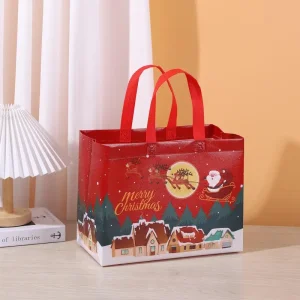
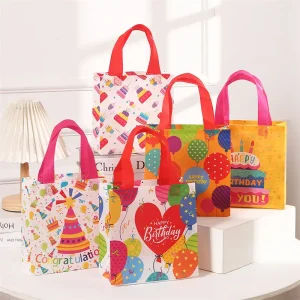
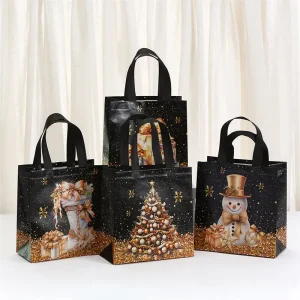
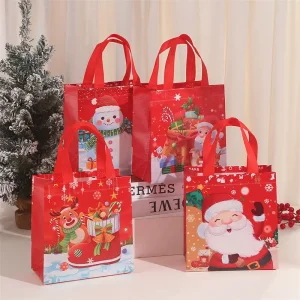
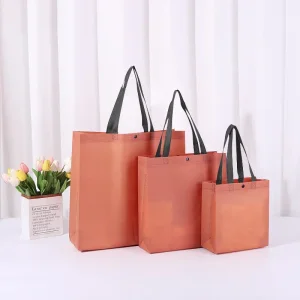
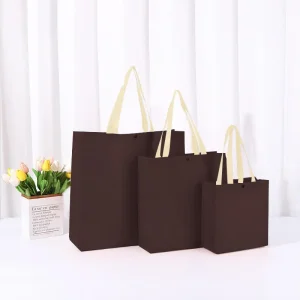
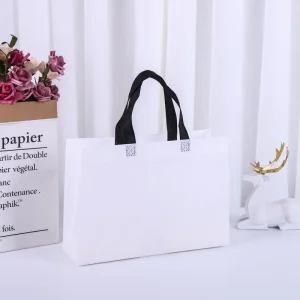
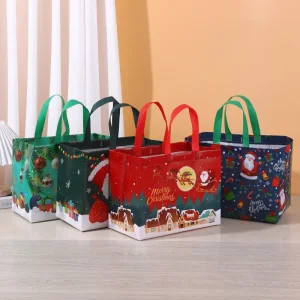
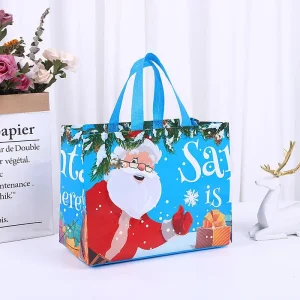
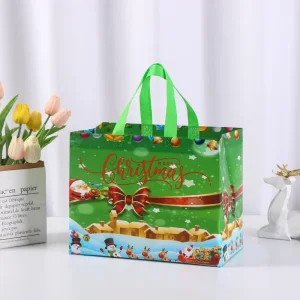
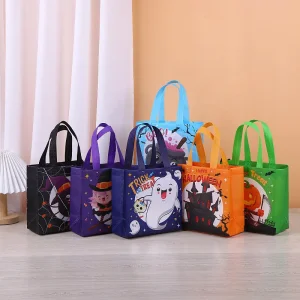
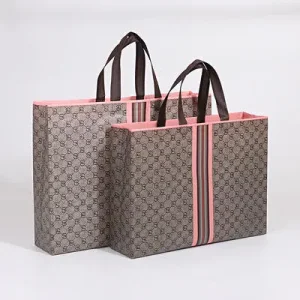
Clear, engineering-focused details to streamline your corporate evaluation processes.
Our standard Minimum Order Quantity (MOQ) for custom-printed spunbond non-woven bags starts at 3,000 pieces for basic designs. For complex laminated rotogravure projects requiring custom plate setup, our standard starting point is 5,000 pieces. Volume-based discounts apply for container-level purchases (20GP / 40HQ).
We strictly monitor our input polymer supplies and printing pigments. We use solvent-free, lead-free inks for all screen and flexographic applications. Every batch can be accompanied by an independent testing certification (SGS or Intertek) demonstrating compliance with Prop 65 lead limits (below 100ppm) and standard phthalate guidelines.
Stitched seams utilize sewing thread, which creates micro-punctures in the fabric, potentially lowering direct tensile load limit under dynamic conditions. Ultrasonic sealing uses sound frequencies to melt and fuse the polypropylene fibers together. This creates a solid bonded edge that is both waterproof and highly resistant to tearing, making it ideal for heavy commercial grocery use.
Yes, we provide flexible FOB, CIF, DDU, and DDP shipping models. For DDP orders, we coordinate with domestic customs brokers and transport lines to manage customs clearance, pay all applicable import duties (including Section 301 tariffs if applicable), and deliver directly to your US distribution center or third-party logistics provider (3PL).
Get volume-based pricing, custom structural design solutions, and compliant packaging options from our 5,000 sqm Wenzhou Longgang facility.
 Miji
Miji