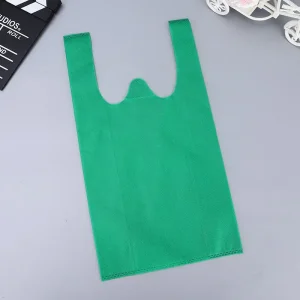
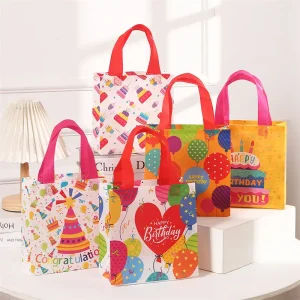
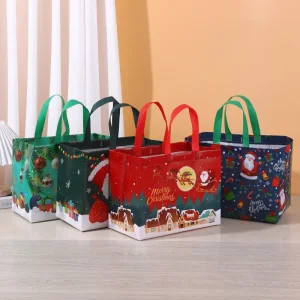
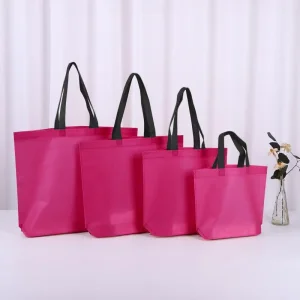
Discover our initial selection of certified, ultra-durable non-woven products engineered to survive heavy reuse cycles and comply with Catalonia's rigorous environment protocols.
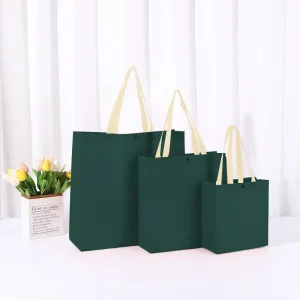
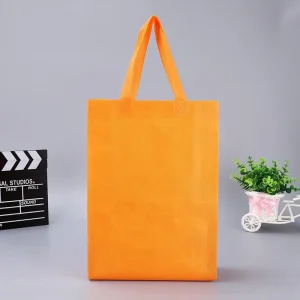
Barcelona stands as a global beacon for environmental preservation and sustainable urban planning. Over the past decade, the Catalonian government and the City Council have introduced strict plastic consumption reduction laws, working under Spain's comprehensive "Ley de Residuos y Suelos Contaminados" (Waste and Contaminated Soils Law) and the European Green Deal. For local retailers, tourist districts, global fashion headquarters located in Barcelona, and trade organizers at Fira de Barcelona, the procurement of retail carriers has shifted entirely from single-use plastics to reliable, multi-use non-woven polypropylene options.
Non-woven PP (polypropylene) fabric has emerged as the industrial gold standard in Barcelona's commercial sectors. Unlike paper packaging, which degrades instantly under humid Mediterranean coastal weather conditions, spunbond and laminated non-woven bags provide high tensile strength, water-resistant layers, and printability options that represent premium B2B brand standards. From retail sectors in Passeig de Gràcia to bulk grocery packaging in Mercat de la Boqueria, manufacturers are pushed to innovate custom structures to support eco-conscious Mediterranean supply chains.
Global supply chain managers face double pressure: maintaining brand aesthetics while satisfying local regulatory constraints. In Europe, especially in regional hubs like Catalonia, packaging suppliers must guarantee OEKO-TEX Standard 100 compliance, REACH certification, and accurate material content documentation. B2B buyers look beyond unit costs to consider lifecycle metrics, logistics carbon footprint, and custom design flexibilities.
As a global B2B supplier, our enterprise solutions resolve procurement vulnerabilities by combining large-scale production efficiencies with precise local compliance mapping. Leveraging raw PP resin sourcing pipelines and advanced heat-sealed ultrasonic automation, we manufacture high-density reusable non-woven bags that bypass manual assembly errors, decrease production times by 40%, and lower logistics packaging volume to decrease transatlantic transport emissions. We facilitate streamlined B2B trade pipelines right into the Port of Barcelona and regional logistics centers in the El Prat industrial zones.

How we construct non-woven fabrics to withstand Barcelona's active retail & exhibition environment.
Using 20kHz acoustic welding systems, we melt fibers locally at joint sites, eliminating standard threads. This yields zero-fray hems capable of supporting up to 15kg without failures.
Gravure BOPP/OPP film lamination delivers barrier protection against moisture, essential for coastal climates, and high-fidelity photorealistic CMYK graphics reproduction.
Using only virgin and GRS-certified post-consumer PP pellets. Our fabrics offer isotropic strength profiles across both machine and cross directions.
Our structured, transparent B2B workflow ensures accuracy at every stage of the manufacturing cycle.
Our sales engineering team aligns with your design department to outline material densities (from 60gsm up to 120gsm), dimensional specifications, handle load-bearing configurations, and custom reinforcement designs.
Physical pre-production proofs are constructed and subjected to tensile strength tests and ink-adhesion verification before the bulk production run. Once approved, the parameters are locked into our automated system.
Polypropylene pellets are melted and extruded into spunbond webs, then custom-slit and routed to automated high-speed conversion machinery. Logo printing, ultrasonic bonding, and handle attachment are executed in-line.
All finished goods are packed in heavy-duty shipping cartons and pallets. We generate all required customs export declarations, Certificates of Origin (CO), and compliance tests required to enter the Port of Barcelona seamlessly.
Providing the detail-oriented B2B buyer with technical options suited to corporate requirements.
From lightweight promotional 50-70 gsm non-woven fabrics to reinforced 80-120 gsm bag structures, we calibrate the base polymer structure to meet specific load-bearing requirements, balancing physical strength and production costs.
We provide matte, glossy, and metallized BOPP film laminations. These additions block grease, prevent liquid ingress, and protect the bag surfaces from scuffing during consumer use.
Choose from rotary screen printing for sharp flat vectors, flexographic printing for high-volume efficiency, or rotogravure processes for photorealistic imagery, using water-based and low-VOC ink sets.
We match body materials with spunbond loop handles, woven PP handles, soft-draw cord closures, or die-cut handles with cross-stitch reinforcement to ensure load paths remain intact.
For modern retail setups, we introduce functional dividers, interior pocket pockets for electronics, and built-in bottle straps, elevating simple canvas-look replacements into valuable consumer assets.
Our systems optimize finished product compaction. We employ hydraulic packing to minimize air space in shipping cartons, keeping maritime freight rates to Europe cost-efficient.
As circular economy policies become more defined across Catalonia and Spain, the technical roadmap for packaging centers on circularity and raw material transparency. In alignment with global environmental goals, we are actively transitioning our non-woven production lines to support bio-derived polypropylene polymers (Bio-PP) and chemically recycled post-consumer waste plastics. This shift reduces reliance on fossil reserves while maintaining the physical strength characteristics of standard spunbond non-woven fabrics.
Additionally, we are upgrading our processes to integrate digital tracing codes (such as laser-etched QR identifiers or NFC chips) directly onto bag labels. This allows European retailers to share supply-chain history, carbon calculations, and recycling guidelines instantly with consumers, reinforcing brand transparency. By standardizing ultrasonic production assemblies and reducing production waste down to 1.5%, we ensure our supply networks remain prepared for future European packaging laws.
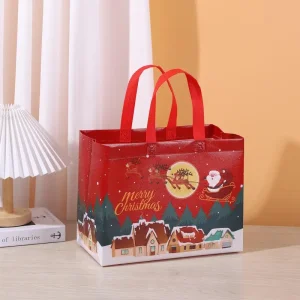
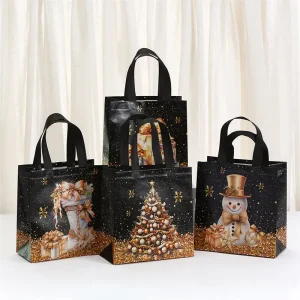
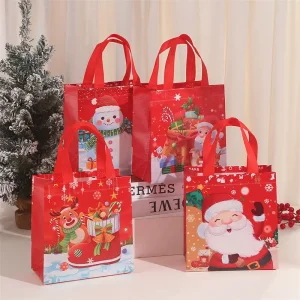
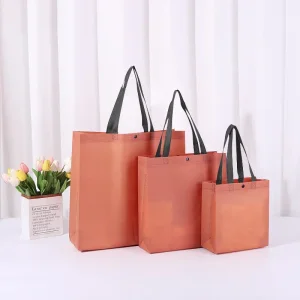
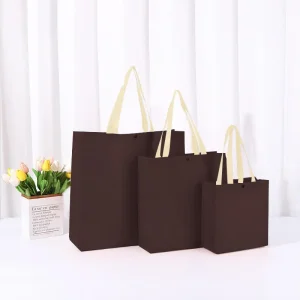
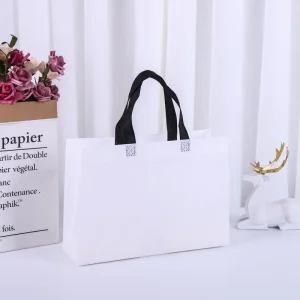
Examine our broader range of customizable bulk non-woven products, ready for fast delivery and direct shipping to Barcelona distribution points.
Expert insights addressing logistics, quality standards, regulatory structures, and order customizations.
 Miji
Miji